


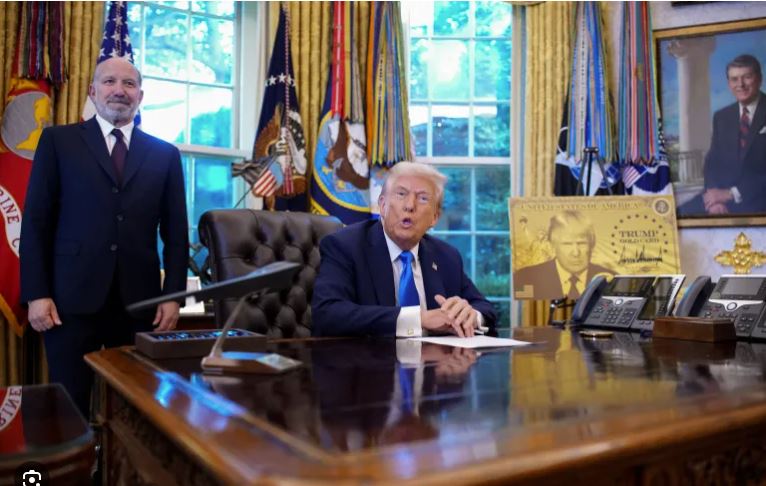
U.S. President Donald Trump on Friday signed an executive order dramatically raising visa costs for foreign workers and wealthy immigrants.
The order mandates an annual $100,000 fee for H-1B visas, which are reserved for highly skilled foreign professionals. Currently priced at $215, this fee hike represents an unprecedented increase.
At the same time, Trump unveiled a new $1 million “Gold Card” visa, designed to provide affluent individuals with a direct pathway to American citizenship. Companies sponsoring foreign workers would face an even higher cost of $2 million.
Trump further announced the creation of a $5 million “Platinum Card” visa, which would allow foreigners to reside in the U.S. for up to 270 days annually while avoiding U.S. taxes on overseas income. These premium visas are set to replace existing employment-based immigration programs that traditionally offered permanent residency options for professors, scientists, artists, athletes, and other distinguished professionals.
Commerce Secretary Howard Lutnick emphasized that the measures would likely slash the number of H-1B visas issued each year, well below the current cap of 85,000. “It’s now economically impossible,” Lutnick said. “If companies want to hire foreign talent, they’ll have to pay $100,000 per year. Otherwise, they will train American workers.”
Critics warn the order sidesteps Congress and could face significant legal battles. Opponents argue that the H-1B program is essential for filling specialized tech positions that U.S. companies struggle to staff. However, some groups, including U.S. Tech Workers, praised the move as a step toward protecting domestic jobs.

Major technology firms such as Amazon, Apple, Google, and Meta declined to immediately comment. Microsoft also refused to respond to media requests. Trump, however, insisted that “all major companies” supported the plan.
The sweeping overhaul is part of Trump’s broader immigration agenda, which previously included raising visa fees for travelers, restricting illegal immigration facilitators, and ending the 365-day grace period for delayed interviews.
If upheld in court, the changes would mark one of the most consequential shifts in U.S. visa policy in decades, particularly for the technology sector and foreign professionals.

