



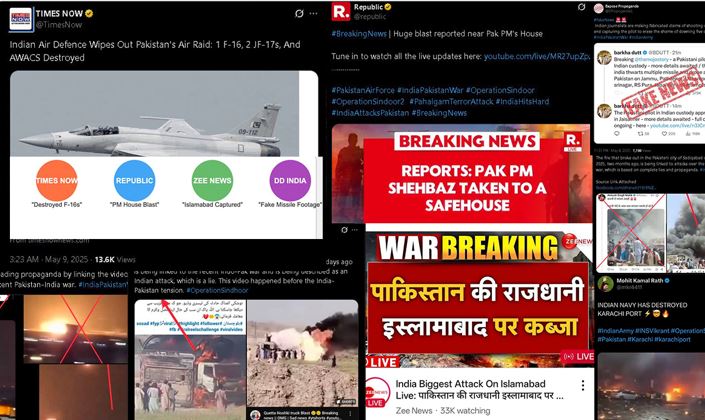
In a desperate bid to satisfy a war-hungry public and cover up the lack of real military success, Indian media didn’t report on Operation Sindoor — they invented it. What should have been honest journalism quickly turned into a Bollywood drama, a blockbuster masala film full of exaggeration and flair. Fake news, recycled footage, and blatant lies filled the airwaves, all wrapped up in a package of nationalistic pride. Here’s what Indian media did — and it’s a far cry from real journalism.
The Fabrication Begins: Fake Headlines and Recycled Footage
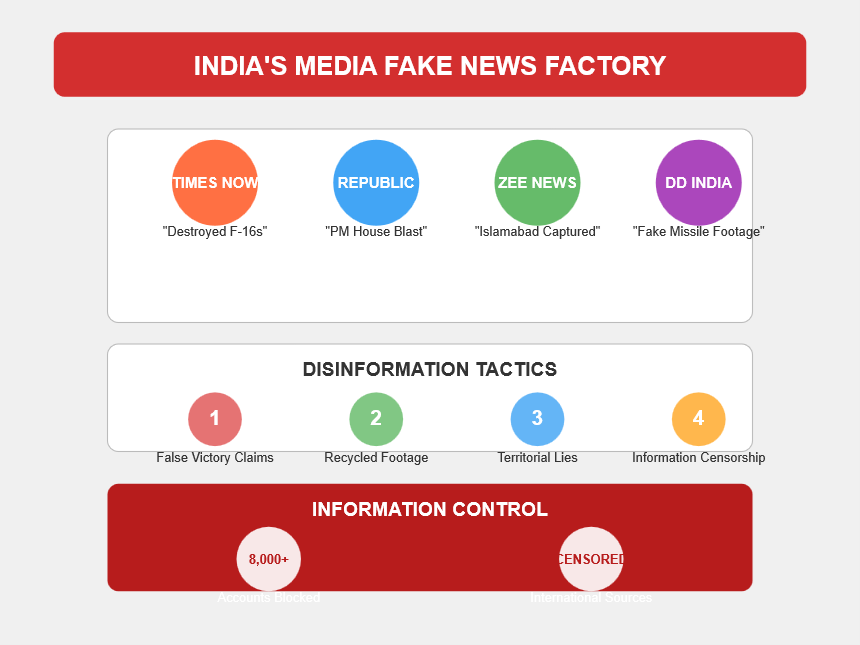
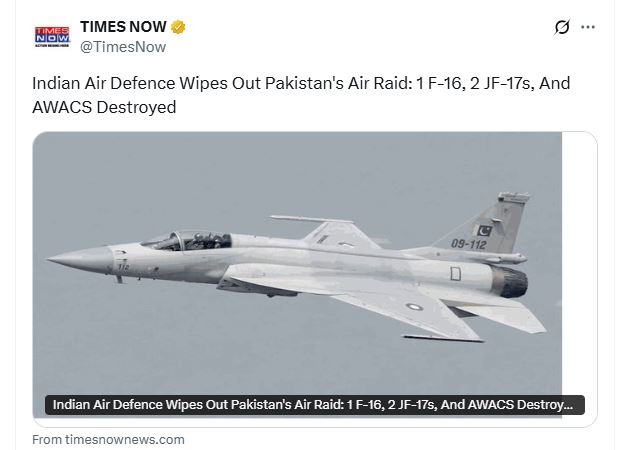
From the very start, Indian media outlets abandoned any notion of journalism and descended into pure fiction. Take Times Now, for instance, which shamelessly claimed that India had destroyed a Pakistani F-16, two JF-17s, and an AWACS aircraft during the operation. However, they didn’t provide a single shred of evidence. Instead, they used old file photograph of a plane.
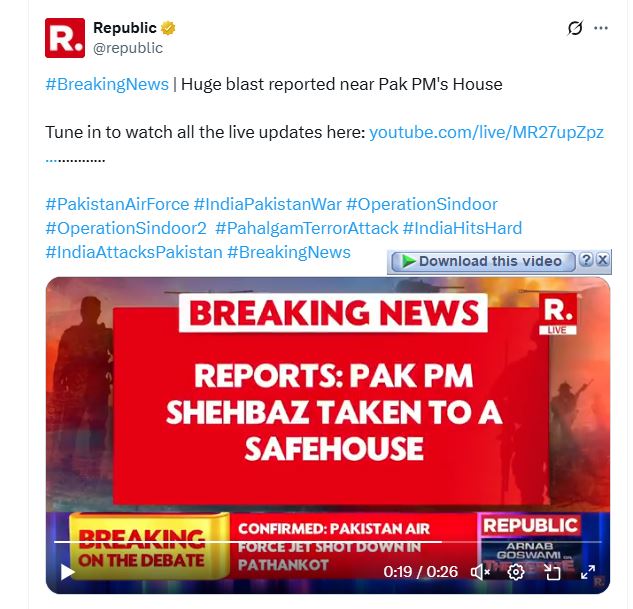
Then came Republic Media Network, which released a fabricated report of a “huge blast near Pakistan’s PM House.” No blast occurred. No sources were cited. But it didn’t matter. The story fit the narrative of India’s unchallenged military might, and that’s all that mattered for Republic — truth was an afterthought.
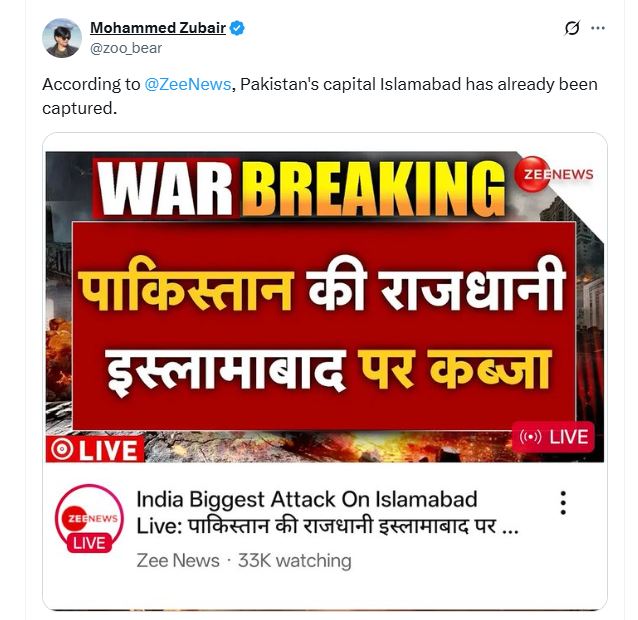
Next, Zee News crossed all lines of decency and sanity, falsely claiming that Islamabad had been captured by Indian forces. This was so far removed from reality that it was hard to tell whether this was a news report or an audition for a Bollywood war film. This wasn’t journalism; it was pure fantasy wrapped in a nationalistic agenda.
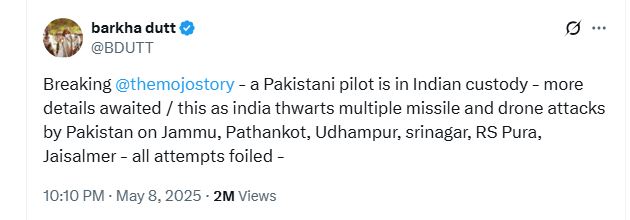
Even veteran journalists, who should have known better, weren’t immune to falling for the frenzy. Barkha Dutt, a so-called respected name in Indian media, claimed that an F-16 was shot down, and its pilot was captured. This reckless reporting was completely unfounded, dangerous, and fueled by nothing but wishful thinking. Barkha, with all her experience, traded integrity for the cheap thrills of nationalistic fervor.

But it wasn’t just the private networks or journalists. Even state-run DD India took part in the deception. they aired old footage of Iranian missile strikes on Israel. The footage was repurposed on Indian social media to falsely claim that India had launched missile attacks on Pakistan. This is the sort of irresponsible, unethical journalism that only adds fuel to the fire — spreading panic, fear, and a complete lack of truth.
Social Media: The Propaganda Factory
Indian social media was no different. It became a breeding ground for lies, with videos and images falsely connecting unrelated incidents to the supposed war. A Philadelphia plane crash was falsely branded a Pakistani port attack. An old truck explosion in Balochistan was misrepresented as an Indian Army operation. A factory fire in Sadiqabad was twisted into a military strike — yet another unfounded and malicious attempt to create a narrative of Indian military superiority.
Censorship and Information Control: The Government’s Crackdown
While Indian media played the role of puppet for nationalistic propaganda, the Indian government took further steps to control the narrative by suppressing dissent. Platform X (formerly Twitter) disclosed that the Indian government had ordered the blocking of over 8,000 accounts, including those of international journalists and media organizations. This mass censorship was a blatant attempt to shut down alternative perspectives and silence those who dared to challenge the fake war stories coming from the Indian media. While X itself called it “censorship”, the government’s intent was clear: control the narrative at all costs, even if it meant silencing the truth.
India isn’t carrying out Operation Sindoor — it’s creating a propaganda screenplay, building a fake narrative of victory that’s far from the truth. Instead of reporting facts, Indian media is inventing stories to serve the government’s agenda.
Meanwhile, Pakistan remains strong, with strategic and tactical advantages. India can’t win a war through fake news. The real battlefield isn’t just about weapons; it’s about truth and credibility — areas where India has already fallen short. In a world where facts are twisted, true strength comes from honesty, strategy, and integrity, not from creating false victories. While the media may deceive the masses for now, they are only eroding the trust in institutions meant to uphold the truth. How long can India keep living in this fabricated reality?

