


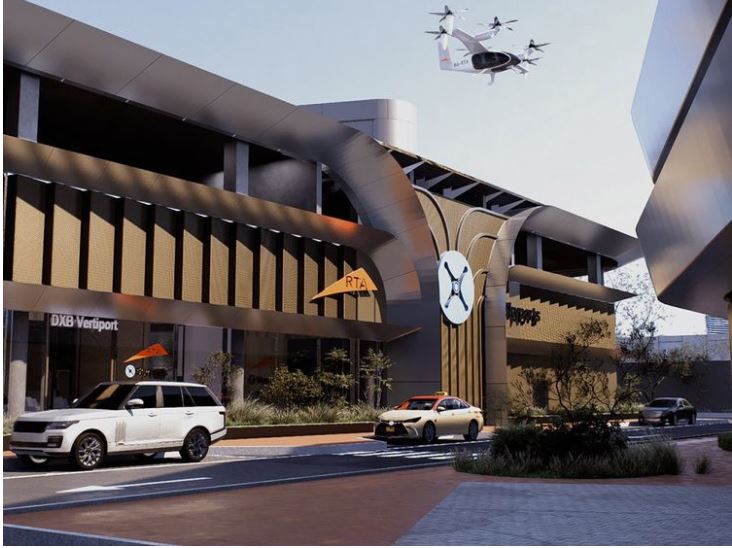
Dubai is one step closer to revolutionizing urban transportation, as Crown Prince Sheikh Hamdan bin Mohammed announced the commencement of construction on the city’s first flying taxi vertiport. The new facility, located near Dubai International Airport, will serve as the hub for Dubai’s aerial taxi service, expected to handle up to 170,000 passengers annually.
Vertiport Design and Capacity Details
The 3,100 square meter vertiport will feature dedicated take-off and landing areas for the electric vertical take-off and landing (eVTOL) aircraft, including charging stations and an air-conditioned arrivals hall. It will be capable of handling 42,000 landings per year, providing a fast and efficient alternative for travelers, particularly between key locations such as Dubai International Airport, Downtown, Dubai Marina, and Palm Jumeirah.
Key Locations for Future Air Taxi Services
The first phase of the aerial taxi project will include stations in some of Dubai’s most iconic areas: Downtown, Dubai Marina, and Palm Jumeirah, with services slated to begin in 2026. The goal is to link these locations to enhance mobility, particularly for high-demand destinations like hotels and the airport.
A Global Push for Electric Air Taxis
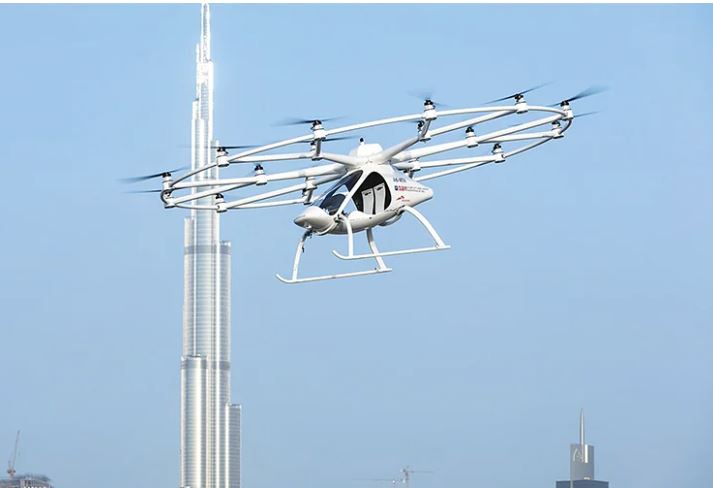
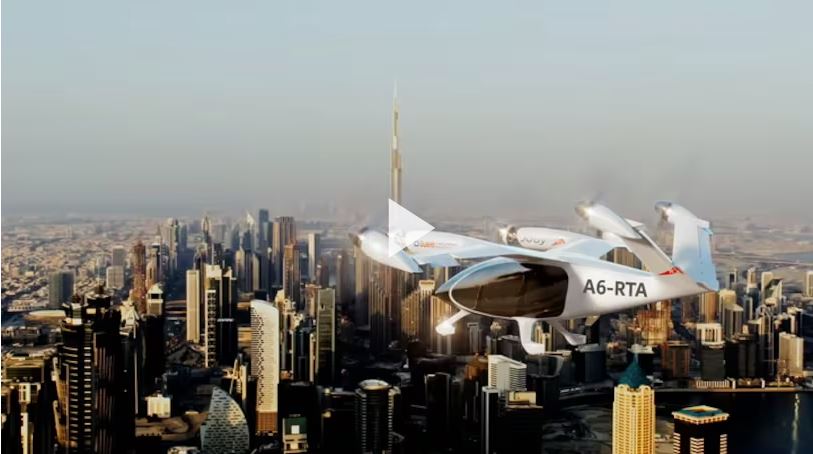
Dubai’s aerial taxi initiative aligns with global ambitions for electric air travel. In addition to Dubai’s efforts, Saudi Arabia plans to introduce flying taxis by 2026, focusing on major tourist destinations like Neom and AlUla, with Saudia Airlines overseeing operations for Hajj and Umrah pilgrim transport. Meanwhile, Joby Aviation has been selected to help launch Dubai’s air taxi services by 2026, with the Joby S4 eVTOL aircraft designed for vertical take-offs and landings and zero emissions.
Advanced eVTOL Technology
The Joby S4 air taxis will have a five-seat capacity, six fans, and four battery packs, offering a top speed of 320 km/h and a range of up to 161 km. The air taxis are designed to be quieter than helicopters, emitting only 45 decibels, roughly the sound level of rain, ensuring minimal environmental impact.
Impact on Traffic and Commuting Times
The introduction of flying taxis is expected to drastically cut down travel time across Dubai. For example, the journey from Dubai International Airport to Palm Jumeirah will take just 12 minutes, compared to the 45-minute car ride during peak traffic. This is expected to help alleviate the traffic congestion that often plagues the emirate.

The Future of Autonomous Air Transport
Dubai continues to position itself at the forefront of innovative transportation. Khaled Al Awadhi, Director of Transportation Technology at the Roads and Transport Authority (RTA), highlighted that the flying taxis aim to provide a modern, efficient, and autonomous transport solution that will connect major areas of Dubai. The service will particularly benefit high-demand areas, including hotels and the airport.
Market Outlook for eVTOLs
The global market for eVTOL aircraft is projected to reach a $1.5 trillion valuation by 2040, according to Morgan Stanley. The market’s growth is expected to span sectors such as airlines, logistics, emergency services, tourism, and security operations, indicating a broad range of potential customers for this emerging technology.
Dubai’s Commitment to Innovation and Sustainability
The development of Dubai’s first flying taxi station marks a significant milestone in the city’s long-term vision for sustainable, high-tech transport solutions. As the first stations open in 2026, Dubai continues to lead the way in shaping the future of global mobility, prioritizing safety, innovation, and environmental sustainability.

