


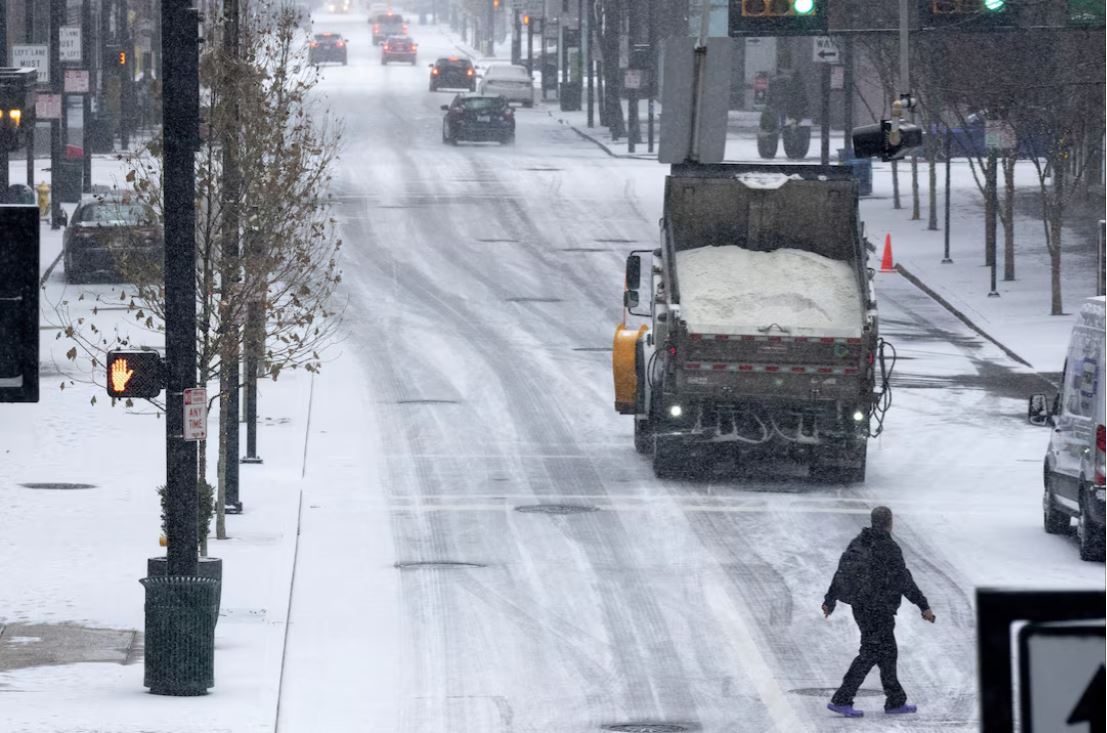
A powerful winter storm brought snow, ice, and freezing temperatures to a vast region of the U.S. on Sunday, impacting over 60 million people across more than a dozen states from Kansas to New Jersey. Winter weather warnings and advisories remain in effect as the storm moves toward the mid-Atlantic.
Washington Braces for Snow During Key Congressional Meeting
Washington, D.C. prepared for heavy snowfall and bitter cold on Monday, the same day Congress is set to formally certify Republican Donald Trump’s election as president. Despite the storm, Republican House Speaker Mike Johnson assured Fox News that lawmakers would carry out their duties as planned. Federal offices in the capital, however, will be closed, the Office of Personnel Management confirmed.
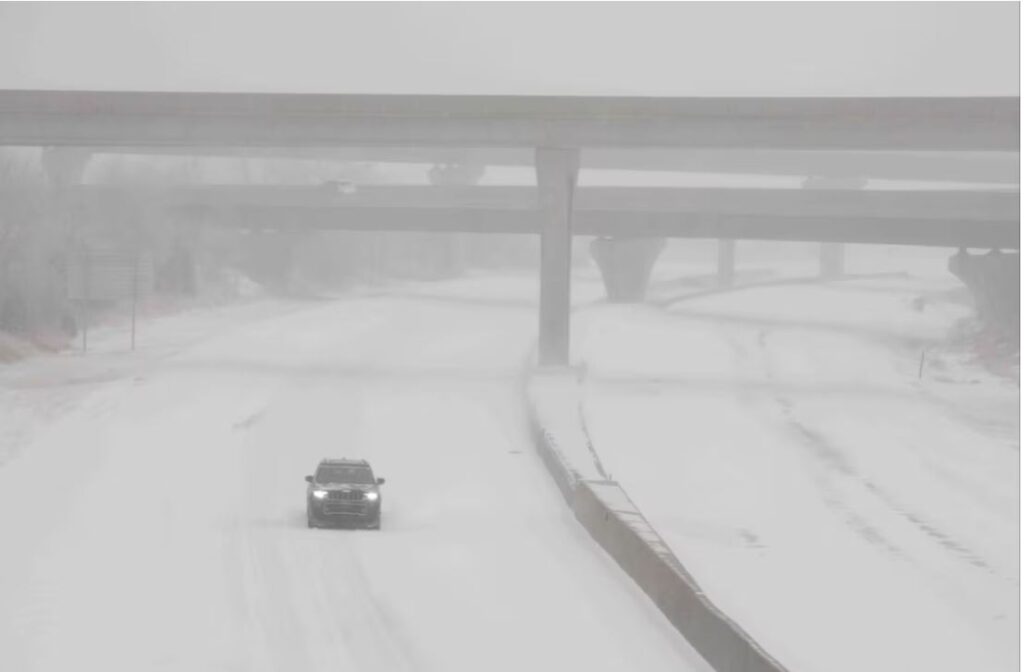
Blizzard Conditions in Kansas and Missouri
Parts of Kansas and northwestern Missouri faced blizzard conditions, with roads blanketed in snow and ice. Officials urged residents to avoid travel. Interstate 70 in Kansas was closed throughout Sunday, while Missouri state police swept over 50 miles of Interstate 29 to assist stranded motorists. By late Sunday, troopers had responded to nearly 600 stranded vehicles and 285 crashes, according to state police reports.
Heavy Snow and Hazardous Ice Across the Region
Snowfall totals ranging from 6 to 12 inches (15 to 30 cm) were forecasted from southern Ohio to Washington, D.C. Freezing rain and sleet in northern Kentucky and southern West Virginia were expected to create dangerous ice accumulations. Public schools in cities like Indianapolis, Cincinnati, Washington, and Philadelphia announced closures for Monday.
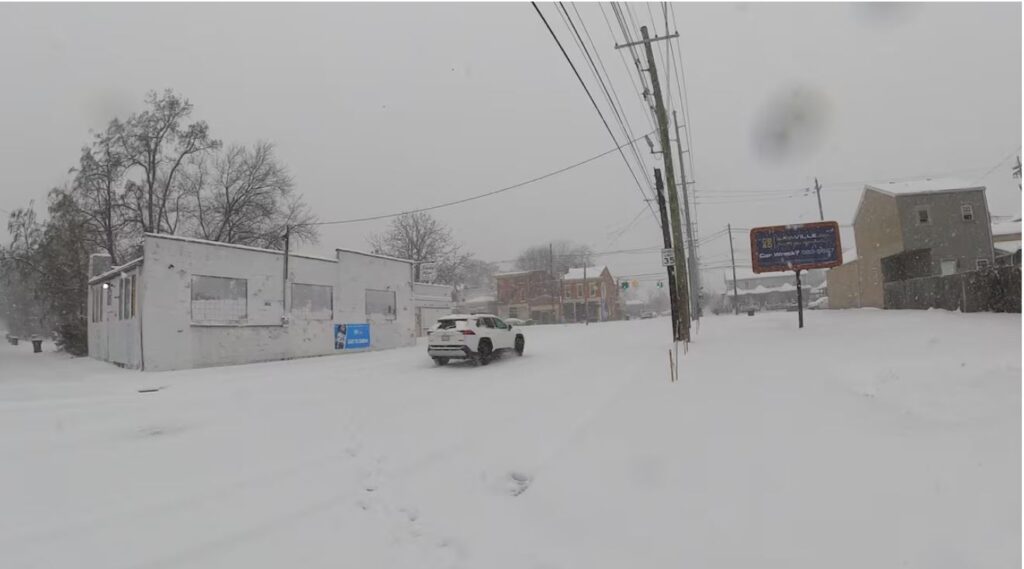
Severe Weather in the South
The storm’s back end brought severe thunderstorms and tornado risks to Arkansas, Louisiana, Mississippi, and Alabama.
Travel Disruptions and Emergency Declarations
Hundreds of flights were canceled, including over 275 in Kansas City and St. Louis, according to FlightAware. Governors in states like Kansas, Kentucky, Arkansas, West Virginia, and Virginia declared states of emergency as conditions worsened.

Arctic Air to Follow Storm
The storm is expected to move offshore by Monday night, but frigid arctic air will follow. Daytime temperatures on Monday and Tuesday are predicted to be 10 to 20 degrees Fahrenheit below average from the Great Plains to the East Coast, the National Weather Service reported.

