


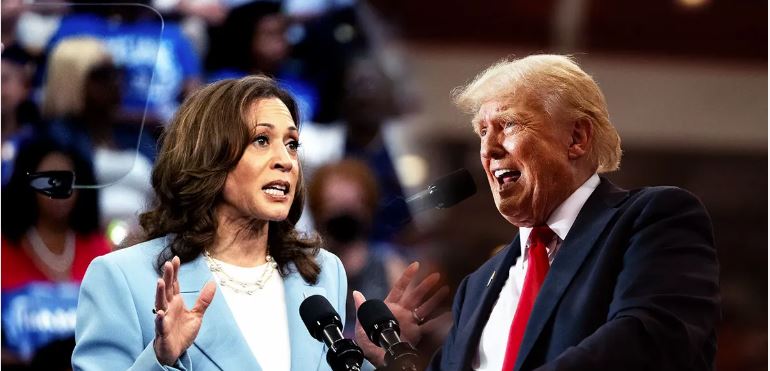
America’s contradictions are on full display in Michigan, where many Arab-Americans are shifting their support to Donald Trump. Despite his controversial comments on immigrants and his call for a Muslim ban, communities in places like Dearborn and Hamtramck are leaning toward the former president in the upcoming election.

This shift isn’t solely about dissatisfaction with current U.S. policies in the Middle East, nor is it just a reaction against Joe Biden and Kamala Harris. It stems from a deeper sense of abandonment by the Democratic Party and concerns over cultural issues.
At Frontier International Academy in Hamtramck, a city with a Muslim-majority population, young voters like Jubran Ali and Edris Alhady express uncertainty about what Harris will offer and feel that Trump may be the safer choice.
Michigan, a key swing state, has the largest Arab-American population in the U.S. Trump’s narrow victory here in 2016 and Biden’s slim win in 2020 have made the state a battleground once again.
Disappointment with the current administration runs deep. Amer Ghalib, the Democratic mayor of Hamtramck, recently endorsed Trump, reflecting frustration with both local and international policies. Cultural clashes, such as the blocked attempt to fly a pride flag on city property, have only heightened the divide.
Despite Trump’s pro-Israel stance, many Arab-Americans feel the current Democratic leadership is worse on issues like the Israel-Gaza conflict. Some, like environmental activist Samraa Luqman, are voting for Trump, citing concerns over genocide as a top priority.

The Republican campaign has made inroads with Arab-American communities, and Democrats risk losing these key voters. As Abdulhakim Alsadeh, a Yemeni-American Democratic caucus leader, warns, this shift is a nationwide phenomenon. A small swing could determine Michigan’s outcome, and ultimately, the presidency.

