


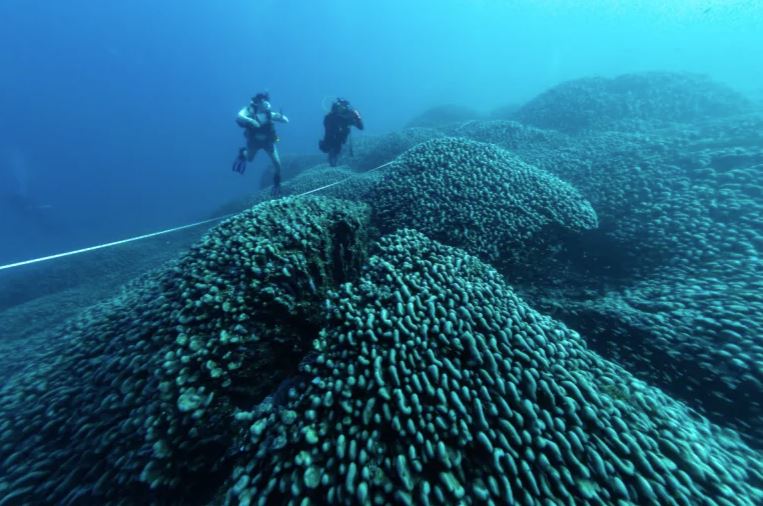
A team of scientists has identified the largest known coral in the waters off the Solomon Islands, an immense and vibrant organism visible from space.
Impressive Size and Age
This colossal coral, a species called Pavona clavus, measures 183 meters (600 feet) in circumference and is estimated to be between 300 and 500 years old. It spans 34 meters (112 feet) in width, 32 meters (105 feet) in length, and rises over 5 meters (16 feet) in height.
Location and Biodiversity
The coral was discovered by the National Geographic Pristine Seas team during an expedition in the Pacific’s “Coral Triangle,” a region famed for its rich marine biodiversity. Unique for its solitary growth, this coral differs from the more common multi-colony reefs.
Colorful Habitat
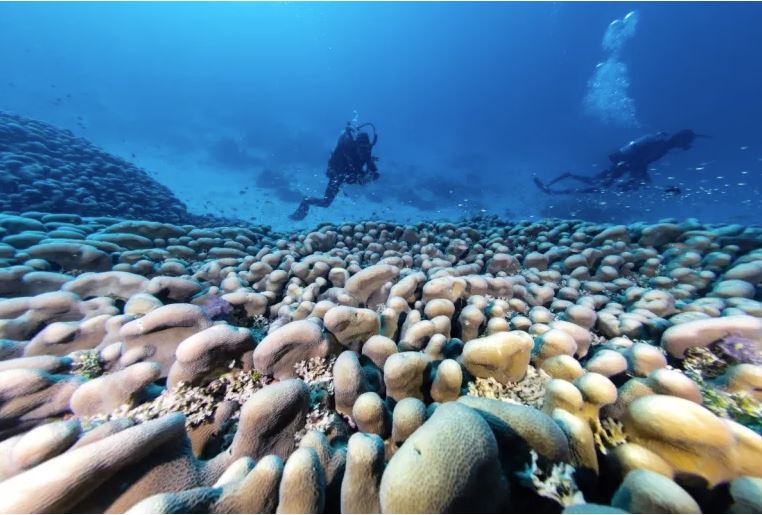
Pavona clavus features a primarily brown structure adorned with vibrant streaks of yellow, blue, and red, creating a striking contrast with the surrounding ocean. It serves as a habitat for various marine species, including fish, shrimp, and crabs, which thrive within its intricate network of polyps.
Scientific Significance
National Geographic marine ecologist Enric Sala, who led the discovery, described it as a “significant scientific breakthrough,” akin to finding the “world’s tallest tree.” He emphasized the urgent need for conservation efforts, as this coral faces threats from global warming and human activities despite its remote location. “This massive coral is pulsing with life and color, but its existence is under threat,” Sala warned.
Origins and Growth
This standalone organism began from a single larva that settled on the seabed and multiplied into millions of genetically identical polyps. Its size and age are remarkable, given that most corals of this species typically grow to only 2 to 3 meters across.

Initial Misidentification
Initially, the team mistook the coral for a shipwreck when they first spotted it underwater. After diving 12 meters down, they confirmed it as Pavona clavus. Local fishers had previously overlooked it, likely mistaking it for a boulder due to its massive size and shape.
Cultural Importance
The discovery holds significant value for the Solomon Islands, where marine life is integral to local culture and livelihoods. Ronnie Posala, a fisheries officer with the Solomon Islands Ministry of Fisheries, called the find “monumental” and stressed the importance of protecting the marine ecosystem. “Such discoveries remind us of our duty to safeguard these natural wonders,” he stated.
Hope for Coral Conservation
Scientists are optimistic that the resilience of this massive coral may provide insights into how coral species adapt to changing environmental conditions. While shallow reefs in the area are degrading due to rising sea temperatures, this deep-water coral oasis has remained healthy, offering hope for coral conservation efforts.
Coral scientist Eric Brown highlighted the large, healthy coral as a beacon of hope for coral conservation. “We are seeing a healthy oasis, even as other coral ecosystems struggle,” he remarked. Local islanders have also been proactive in establishing conservation zones to protect the area.
Global Threats Remain
Although the coral is located in a remote and protected area, scientists caution that it is not immune to global threats such as ocean warming and pollution, which pose serious risks to coral reefs worldwide.

