


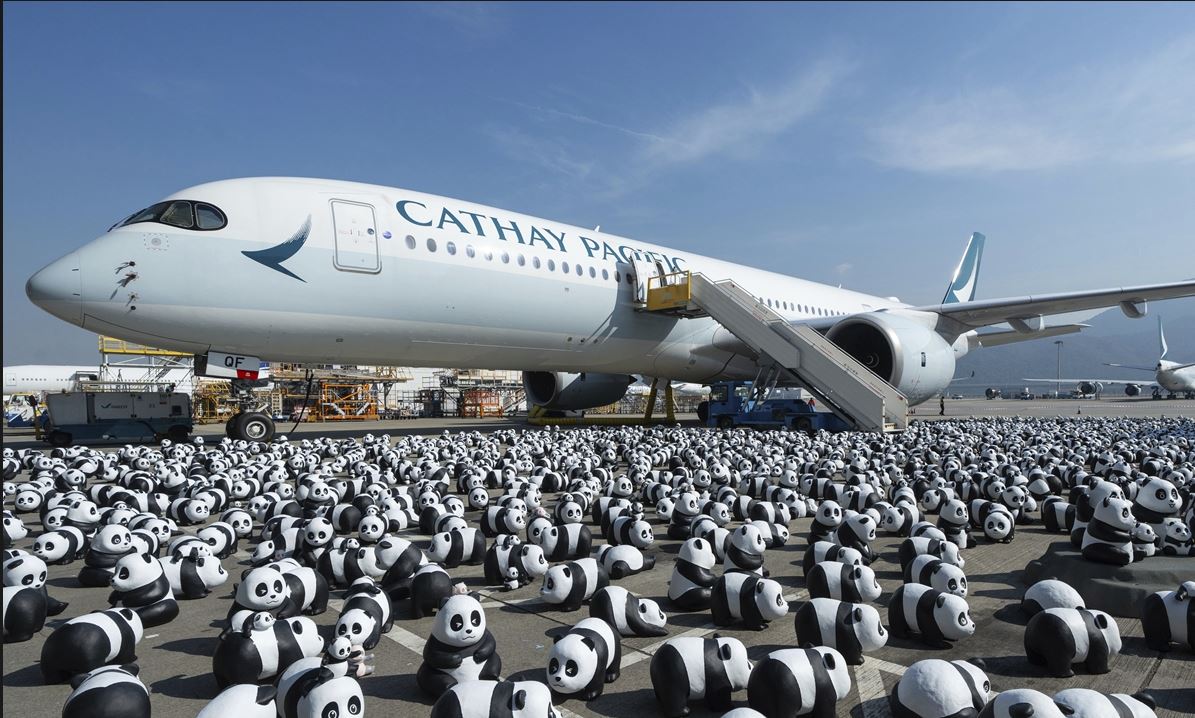
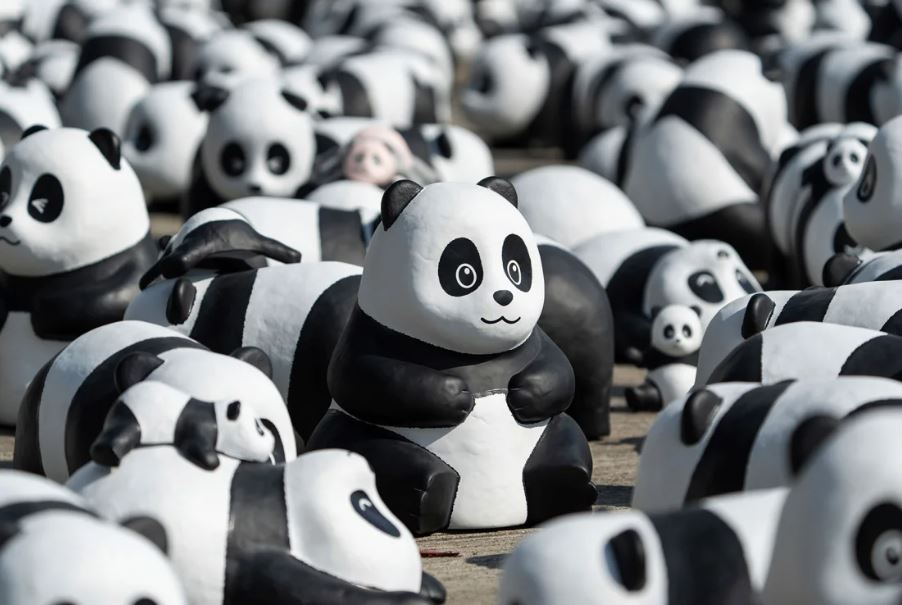
Starting this Saturday, Hong Kong residents and tourists will be greeted by 2,500 giant panda sculptures as part of the city’s largest panda-themed exhibition, PANDA GO! FEST HK. The event officially kicked off with a launch ceremony at Hong Kong International Airport on Monday.
The sculptures will first be displayed at the Avenue of Stars in Tsim Sha Tsui, a bustling shopping and tourist hub, before being showcased at three other locations, including Ocean Park, throughout December.
Ocean Park: A Panda Haven
Ocean Park, home to twin panda cubs and four other pandas, is one of the key sites for the exhibition. Six of the sculptures, crafted from recycled rubber barrels and resins, are inspired by the park’s pandas.
The cubs, born in August to their mother Ying Ying, hold a special distinction — Ying Ying became the world’s oldest first-time panda mom. Visitors may get to meet the cubs as early as February. Meanwhile, the newly arrived pandas, An An and Ke Ke, gifted by Beijing in September, are set to make their public debut this Sunday. During a media preview, An An was seen munching on bamboo while Ke Ke playfully climbed on an installation.
Boosting Tourism with the “Panda Economy”
Pandas have long been a symbol of China’s cultural diplomacy, and Hong Kong is leveraging their popularity to revive its tourism industry. The city, which has struggled to regain its status as a top travel destination, sees the pandas as an economic opportunity.
Officials are encouraging businesses to capitalize on the growing “panda economy,” and tourism representatives are optimistic about the appeal of housing six pandas. While caring for pandas in captivity is costly, their presence is expected to attract a significant number of visitors.

A Legacy of Panda Diplomacy
Ying Ying and the cubs’ father, Le Le, were gifted to Hong Kong by Beijing, continuing a tradition of panda diplomacy since the city’s return to Chinese rule in 1997. The first pair of pandas, An An and Jia Jia, arrived in 1999. Jia Jia holds the record as the oldest panda ever to live in captivity, passing away at 38 in 2016.
According to the World Wide Fund for Nature, pandas in the wild live an average of 14 to 20 years, while those in captivity can live up to 30 years. Hong Kong’s panda residents are now central to the city’s cultural and economic revitalization.

