


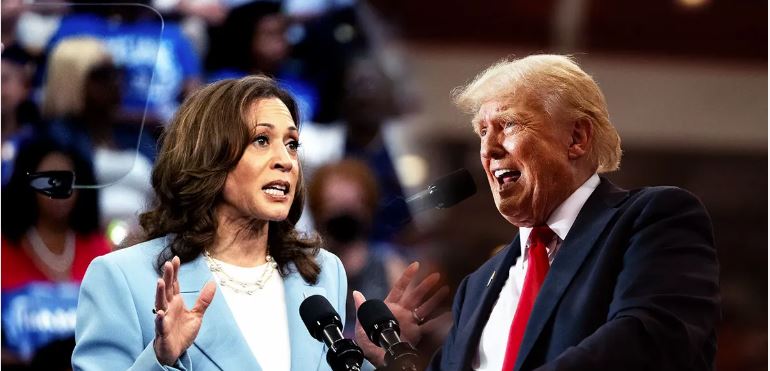
The race for the White House has turned into a close contest between Democratic candidate Donald Trump and Republican candidate Kamala Harris.
While some Americans have already cast their votes through early voting, the majority will vote today. However, there’s a unique twist: voting isn’t limited to Earth—it’s happening in space too.
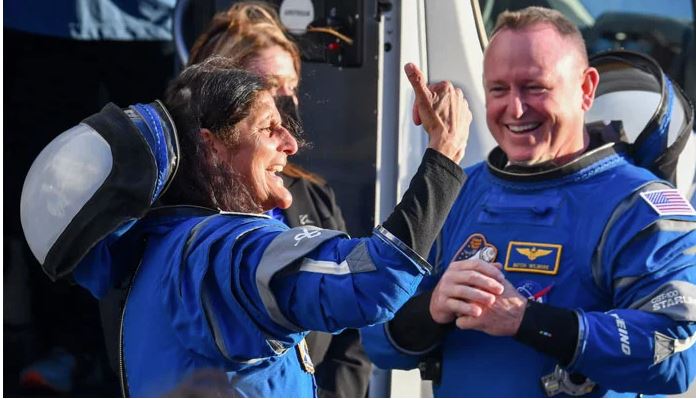
Yes! A small group of NASA astronauts, currently 250 miles above Earth on the International Space Station (ISS), will cast their ballots for the 47th President of the United States. Among these astronauts are 58-year-old Sunita Williams and 61-year-old Barry “Butch” Wilmore, who initially embarked on an eight-day mission on June 6. Due to a malfunction with the Boeing Starliner spacecraft, they are now set to remain in space for eight months, with their return anticipated in February 2025.
For nearly 20 years, NASA has provided astronauts the opportunity to vote from space.
This initiative began after astronaut John Blaha missed voting in the 1996 presidential election due to being on a space mission. In response, a bill was passed in 1997 allowing astronauts to vote remotely. Since 2004, astronauts have cast their votes from the ISS in every U.S. presidential election, except for 2012, when an astronaut opted for early voting on Earth.
Voting from space is more complex than regular electronic voting. NASA maintains communication with the ISS through the Near Space Network.

Astronauts fill out their electronic ballots onboard, which NASA encrypts and uploads to the station’s system. The encrypted ballots are then transmitted to NASA’s White Sands Test Facility in New Mexico via the Tracking and Data Relay Satellite System (TDRSS) and subsequently forwarded to Mission Control in Houston.
Mission Control then securely sends the ballot electronically to the astronaut’s county clerk, ensuring only the astronaut and the clerk’s office have access to it.

