


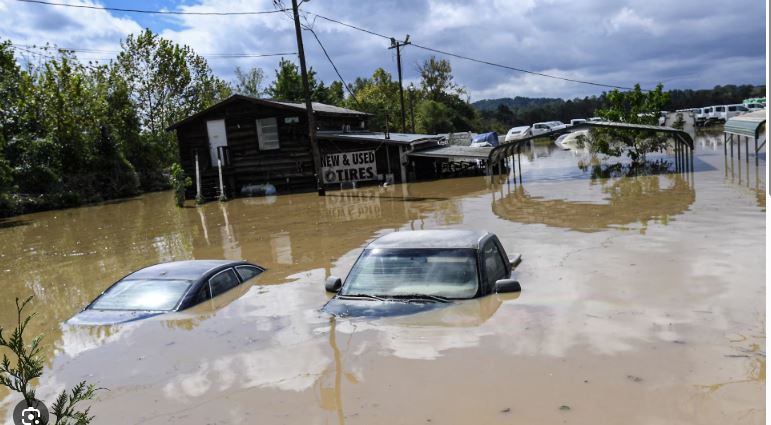
A pair of hurricanes passing well east of the U.S. coast produced dangerous surf and rip currents — and led to the collapse of five unoccupied homes on North Carolina’s Outer Banks — while officials in Bermuda warned that the stronger of the two systems, Hurricane Imelda, posed a serious threat.
Cape Hatteras National Seashore said the five vacant houses in Buxton gave way Tuesday afternoon between about 2:00 and 2:45 p.m.; there were no injuries reported. The collapses came as powerful waves and beach erosion battered the area.
In Bermuda, forecasters said Humberto was already affecting the island with winds near 25 mph, but attention turned to Imelda — which strengthened to a Category 1 hurricane and, officials warned, was expected to bring hurricane conditions Wednesday night into Thursday. Michael Weeks, Bermuda’s minister of national security, called Imelda “the storm of greatest concern to us” and urged residents to take the threat seriously. He said hurricane-force winds could last four to six hours overnight Wednesday into Thursday.
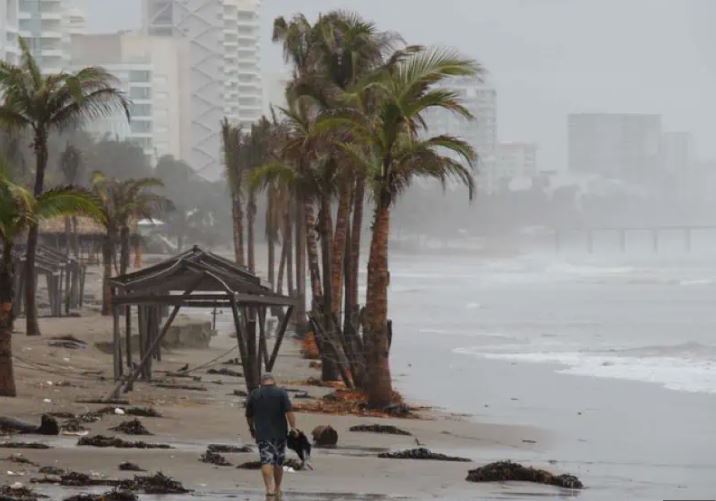
Neither Humberto nor Imelda made landfall in the United States; both remained over open water. The National Hurricane Center said Imelda — centered east of Florida — was forecast to continue moving northeast toward Bermuda. Still, the storms generated dangerous surf and life-threatening swells along parts of the U.S. East Coast, the agency warned.
Imelda was reported with maximum sustained winds of 85 mph and was about 665 miles west-southwest of Bermuda around 5 p.m. Tuesday, moving east-northeast at roughly 12 mph, according to the hurricane center bulletin. Forecasters and meteorologists said Humberto’s presence likely nudged Imelda on a track away from the Southeastern U.S., reducing the risk of catastrophic rainfall on the mainland.
“This is really what’s going to be saving the United States from really seeing catastrophic rainfall,” said Alex DaSilva, lead hurricane expert at AccuWeather. Because the two storms were close enough to interact, meteorologists noted they were subject to the Fujiwhara effect — a relatively uncommon phenomenon in which nearby cyclones influence each other’s motion. “It doesn’t happen that often to get two storms this close together — especially two strong ones,” said Andy Hazelton, a hurricane modeler at the Cooperative Institute for Marine and Atmospheric Studies at the University of Miami.

State officials along the Carolina coast took precautions. North Carolina Gov. Josh Stein issued a state of emergency in advance of Imelda’s formation to unlock resources, and South Carolina Gov. Henry McMaster said search-and-rescue teams were being pre-positioned.
The storms have already taken a human toll elsewhere: Cuban Prime Minister Manuel Marrero said late Monday that two people died in Santiago de Cuba province after Imelda affected eastern parts of the island; no further details were provided.
The hazardous surf also produced smaller, unusual effects: Florida crews found a couple of sea turtle hatchlings washed ashore, and Justin Perrault of the Loggerhead Marinelife Center in Juno Beach said they had recovered two “washbacks” over the weekend and expected more could come in as rough seas continue.
As forecasters tracked both systems, officials urged coastal residents and beachgoers to heed warnings about rip currents and avoid entering the ocean while the dangerous swells persist.

