


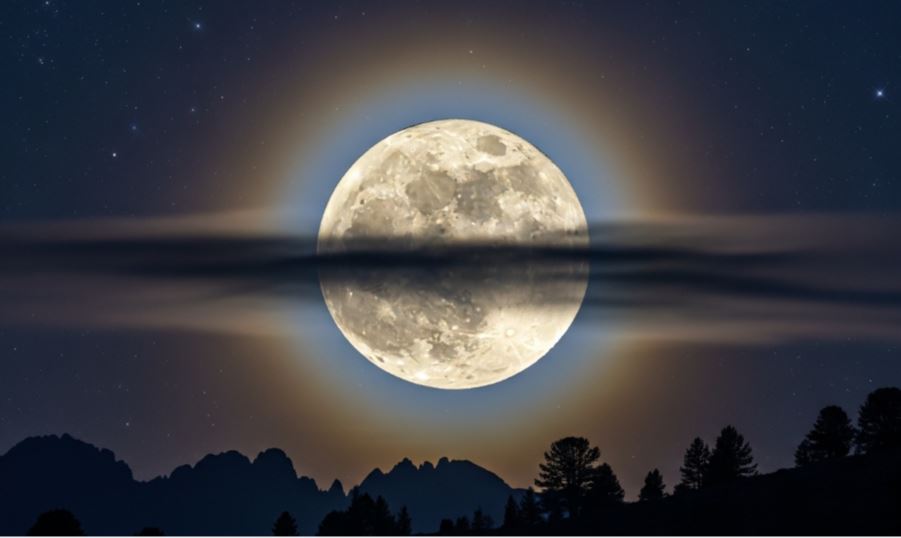
Texas skywatchers will get an early-morning treat Tuesday as a total lunar eclipse transforms the moon into a glowing “blood moon.” Instead of its usual silvery shine, the moon is expected to take on shades of copper, crimson and deep orange during the peak of the eclipse.
What causes the moon to turn red?
A total lunar eclipse happens when the sun, Earth and moon align in a straight line, with Earth positioned in the middle. As a result, Earth’s shadow falls across the lunar surface. The moon first passes through the penumbra, the lighter outer part of Earth’s shadow, where the dimming is faint and gradual. The dramatic change begins when the moon enters the umbra, the darker inner shadow. At this stage, a curved shadow appears to take a “bite” out of the moon. During totality, the moon does not vanish completely. Instead, it glows in rich red and orange tones, creating the striking “blood moon” effect.
Why does this color appear?
The reddish hue is caused by Earth’s atmosphere. Sunlight passing through the atmosphere bends and scatters, filtering out shorter blue wavelengths while allowing red and orange light to reach the moon. This filtered light bathes the lunar surface in warm tones.
How the eclipse will unfold

The eclipse will progress gradually over several hours. The moon will first darken slightly as it moves into the penumbra. As it travels deeper into the umbra, the shadow will expand and the moon will grow significantly darker.
At peak totality, the moon will display its deepest red shade. The exact color may vary depending on atmospheric conditions. Dust, wildfire smoke or volcanic ash in the air can intensify the red tones, while clearer skies may produce a brighter orange glow. Once totality ends, the process will reverse. The moon will slowly emerge from Earth’s shadow, regaining its brightness and returning to its familiar appearance.
How to watch in Texas
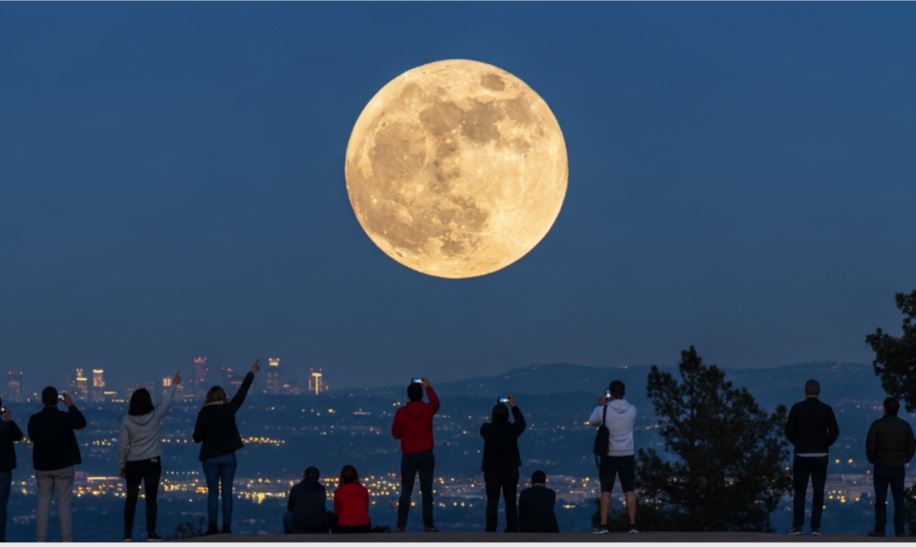
Unlike a solar eclipse, a lunar eclipse is completely safe to observe with the naked eye. No special glasses are required. However, binoculars or a telescope can enhance the view and reveal more detail. Cloud cover may affect visibility across Texas. Parts of the Panhandle and West Texas could experience breaks in the clouds, improving chances of seeing totality. Meanwhile, Central and Southeast Texas may face thicker cloud cover during peak viewing hours. Low clouds are expected to be the main concern in Central and East Texas, though even short clear intervals could offer a glimpse of the red moon.
When is the next chance?
Total lunar eclipses occur once or twice a year somewhere around the world, but they are not always visible from every location. If weather conditions interfere this time, skywatchers will have another opportunity. The next total lunar eclipse visible across North America is expected on New Year’s Eve 2028, providing another chance to witness the moon glowing in shades of red.

