


Australia has approved a groundbreaking ban on social media use for children under 16, positioning itself at the forefront of global efforts to regulate Big Tech. The law, passed on Thursday, imposes strict penalties on platforms like TikTok, Instagram, and Facebook, with fines reaching up to A$49.5 million ($32 million) for non-compliance. Enforcement trials are set to begin in January, with the full ban taking effect in a year.
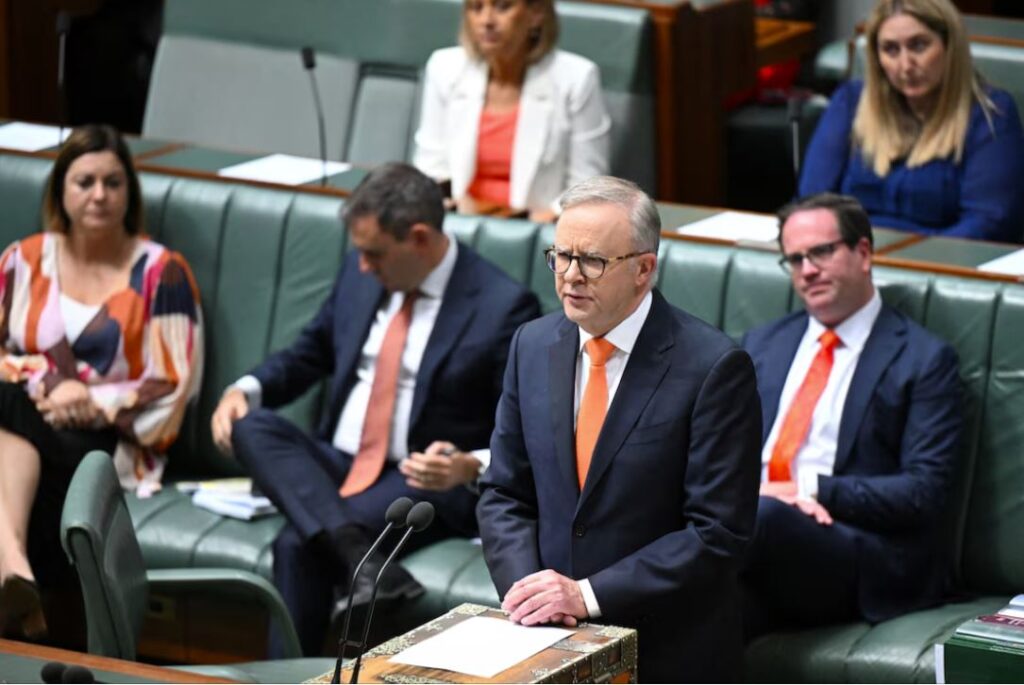
Prime Minister Anthony Albanese emphasized the significance of the legislation, stating, “Platforms now have a social responsibility to prioritize the safety of our kids. This gives parents the assurance they need to protect their children.”
Health Risks and Harmful Content Highlighted
The ban aims to address concerns about the negative impact of excessive social media use on children’s mental and physical health. Albanese specifically cited harmful body image content targeting girls and misogynistic material aimed at boys as key reasons for the law.
Public Response: Relief and Outrage
The decision has divided public opinion. Sydney resident Francesca Sambas supported the ban, saying, “It’s a great idea because social media isn’t always appropriate for kids.” However, others, like 58-year-old Shon Klose, criticized the move as undemocratic. “I feel this government has thrown democracy out the window,” Klose said.
Children themselves have expressed intentions to circumvent the ban, reflecting similar challenges faced by other countries. For instance, laws in France and some U.S. states require parental permission for minors’ access, but Australia’s regulation is more absolute.
Criticism from Tech Companies
Social media companies, including TikTok, have voiced strong opposition to the ban. A TikTok spokesperson argued that the rushed process overlooked expert advice from mental health and online safety advocates. “This ban could push children into unregulated corners of the internet without safety tools or protections,” the spokesperson warned.

A Global Benchmark or Overreach?
Despite criticism, Albanese defended the move, acknowledging it won’t eliminate all risks but insisting it sends a strong message about protecting children. “Just as alcohol bans for minors aren’t perfect, this is the right thing to do,” he said.
Straining Ties with the U.S. and Tech Giants
The legislation may also strain Australia’s relationship with the United States, where some view it as a potential threat to internet freedom. Elon Musk, owner of X, called it a “backdoor way to control internet access.”
The ban adds to existing tensions between Australia and U.S.-based tech companies, following Australia’s earlier legislation requiring platforms to pay royalties to media outlets and efforts to penalize platforms for failing to combat online scams.
As Australia moves forward with this unprecedented regulation, its success or failure could serve as a model—or cautionary tale—for other nations grappling with Big Tech’s influence.

