


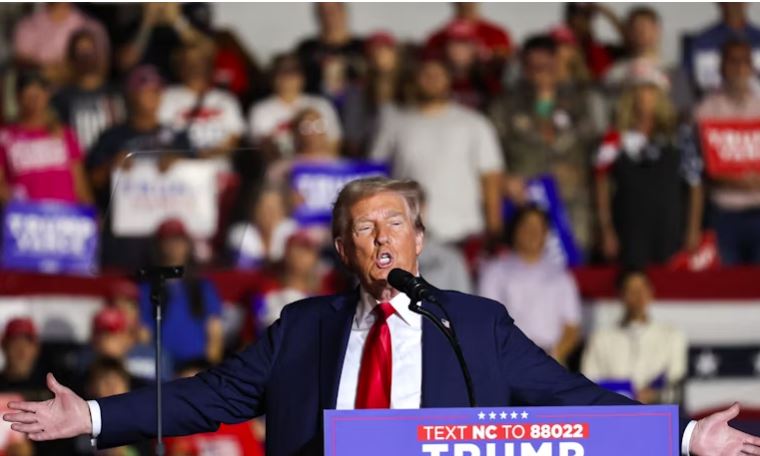
President-elect Donald Trump has been sentenced to an unconditional discharge after being convicted on 34 charges of falsifying business records. The charges stem from a hush money payment made to adult film star Stormy Daniels during the 2016 presidential campaign.
Issued by New York State Judge Juan Merchan, the sentence ensures Trump faces no imprisonment, fines, or probation. However, the conviction will remain on record, marking him as the first US president-elect to be sentenced for a criminal conviction. Despite this, Trump is set to take office on January 20 as a convicted felon.
Case Background and Conviction
The case revolved around allegations that Trump authorized his former attorney, Michael Cohen, to pay Daniels $130,000 to silence claims of an affair in 2006, which Trump denies. Daniels testified during the trial, leading to Trump’s conviction in May 2024.
Efforts to halt the trial were denied when the US Supreme Court ruled in a narrow 5-4 decision that the case could proceed. Trump described the sentencing as a “fair decision” and hinted at further legal appeals.
What Is an Unconditional Discharge?
An unconditional discharge allows a conviction to stand without imposing penalties such as prison time, fines, or probation. According to legal experts, it preserves the jury’s verdict while limiting the impact on the convicted individual.
“This court has determined that the only lawful sentence that permits entry of judgment of conviction without encroachment on the highest office of the land is a sentence of unconditional discharge,” stated Judge Merchan during the sentencing.

Implications of the Sentence
While the unconditional discharge spares Trump from immediate legal penalties, the conviction carries symbolic weight. As a convicted felon, Trump faces certain restrictions, such as being barred from purchasing firearms in states like New York and Florida.
Class E felony charges like those Trump faced could have carried penalties of up to four years in prison and significant fines per count. However, prosecutors recommended leniency to avoid interfering with the presidency.
A Presidency Under a Shadow
As Trump prepares for his inauguration on January 20, the broader implications of a convicted felon assuming the presidency raise questions about governance and legal accountability. While this legal battle concludes, its impact on Trump’s legacy and the office of the presidency remains significant.

