


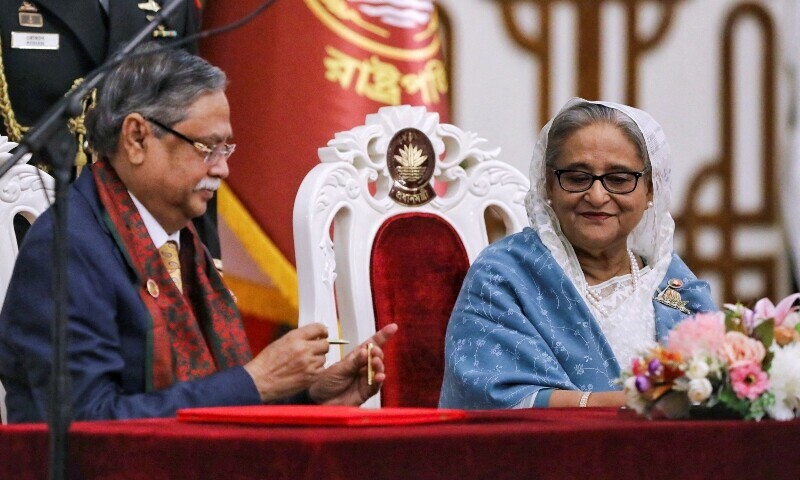
Bangladesh’s President, Mohammed Shahabuddin, 74, is facing increasing calls to resign following the recent revolution that ousted ex-Prime Minister Sheikh Hasina in August. Shahabuddin, known as “Chuppu,” was appointed by Hasina’s now-disbanded Awami League in 2023. While his role as president is mainly symbolic, his possible removal has sparked concerns about a constitutional vacuum.
Interim Government Weighs Options
Shafiqul Alam, press advisor to the interim government now led by Nobel Peace Prize winner Muhammad Yunus as chief adviser, stated on Monday, “Any decision regarding the president’s removal will be based on political consensus.” Yunus’s government spokesperson, Syeda Rizwana Hasan, confirmed that discussions regarding Shahabuddin’s removal are ongoing, noting the complexities surrounding his appointment by what she described as a “fascist government.”
Public Outcry Over Alleged Missteps
Earlier this month, Shahabuddin drew public backlash after stating he had not seen Hasina’s resignation letter, leading many to question the legality of her departure. Asif Nazrul, a former student protest leader now in Yunus’s administration, labeled Shahabuddin’s statement as a “violation of his oath of office.”
Constitutional Challenges Complicate Removal

The demand for Shahabuddin’s resignation faces constitutional obstacles. Bangladesh’s parliament, which would require a two-thirds vote to impeach the president, was suspended following Hasina’s ouster, creating uncertainty about the impeachment process and potential successors. Mirza Fakhrul Islam Alamgir, secretary general of the Bangladesh Nationalist Party (BNP), cautioned, “We must avoid impulsive decisions that could create a constitutional vacuum.”
Ongoing Instability and Concerns Over National Fragility
The situation has fueled protests, with police clashing with hundreds of demonstrators attempting to storm the presidential compound last week, leaving 30 injured. Hasnat Abdullah, leader of Students Against Discrimination, which played a major role in the revolution, stressed the need for a prompt decision, although only the BNP has opposed removing Shahabuddin.
Professor Mamun Al Mostofa from the University of Dhaka expressed concerns about the potential fallout. “If consensus on a successor isn’t achieved, we could see renewed unrest,” Mostofa warned, adding that the interim government might struggle to manage further instability, risking a “cycle of anarchy.”
Uncertain Path Forward
As discussions continue, Bangladesh remains in a fragile state, with leaders urging caution to prevent constitutional and political instability during the country’s transitional period.

