


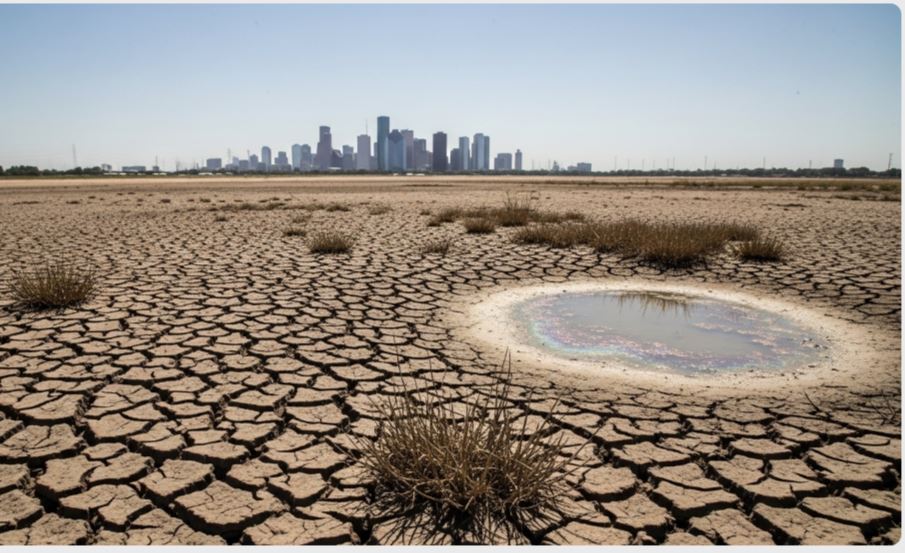
Houston and much of Texas are experiencing ongoing drought conditions following a dry and unusually warm winter, according to the latest U.S. Drought Monitor report.
Widespread moderate drought across Texas
The most recent drought map, released on April 2 with data through March 31, shows that all of Harris County is under a moderate drought classification. This level is considered the second-lowest on the drought intensity scale, but it still reflects significant moisture shortages. Across the state, nearly 89 percent of Texas is facing at least moderate drought, while almost all remaining areas are classified as abnormally dry.
Limited rainfall offers little relief
Although parts of the Houston area received scattered thunderstorms last weekend, including over an inch of rain at Hobby Airport, the rainfall was not enough to improve overall drought conditions. Meteorologists indicate that while additional rain is expected later in the week, it may only provide temporary relief rather than a lasting solution.
Dry winter and rising temperatures worsen conditions
Experts point to a combination of below-average rainfall and higher-than-normal winter temperatures as key factors behind the drought. Warmer weather has caused plants to grow earlier than usual, increasing water consumption and accelerating evaporation. While this has made landscapes appear greener for now, it is also depleting soil moisture more quickly, raising concerns for the coming summer months if rainfall does not continue.
South Texas faces more severe impacts
Drought conditions are even more intense in South Texas, where some regions are experiencing severe to extreme drought levels. Nueces County, home to Corpus Christi, is among the hardest hit. The area is already dealing with a water crisis, and experts warn that it would take a substantial and sustained amount of rainfall to replenish depleted reservoirs.
Long-term concerns and climate factors
Climatologists note that changing climate patterns are making rainfall more unpredictable, increasing the likelihood of prolonged dry periods. While it is difficult to measure long-term trends precisely, higher temperatures and erratic precipitation may contribute to more frequent droughts over time.

Need for conservation as population grows
Despite the current challenges, experts believe Texas is unlikely to run out of water entirely. However, as the state’s population continues to grow, water conservation will become increasingly important. Reducing water usage through changes in landscaping and daily consumption habits may be necessary to manage resources more effectively in the future.

