


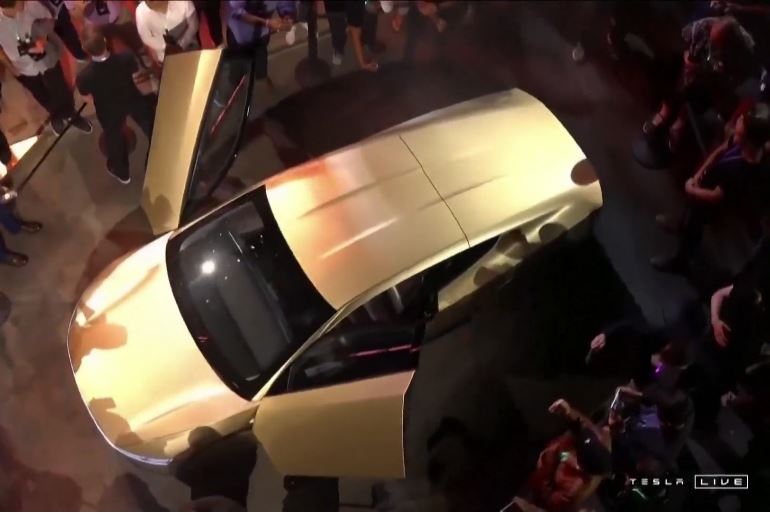
Tesla CEO Elon Musk unveiled his vision for a “fun, exciting future” on Thursday, showcasing self-driving cars without steering wheels, parking lots transformed into parks, and robots walking among people—all part of what he described as an “age of abundance.” Musk once again promised these innovations would be available within a few years, though whether he can meet these ambitious goals remains to be seen.
The plans, including the reveal of Tesla’s robotaxi designs, were highlighted at a flashy event in California, where Tesla’s sci-fi-inspired models of the robotaxi and a larger Robovan were on display. Musk referenced the movie Blade Runner but noted that his vision for the future was more cheerful than the film’s dystopian tone.
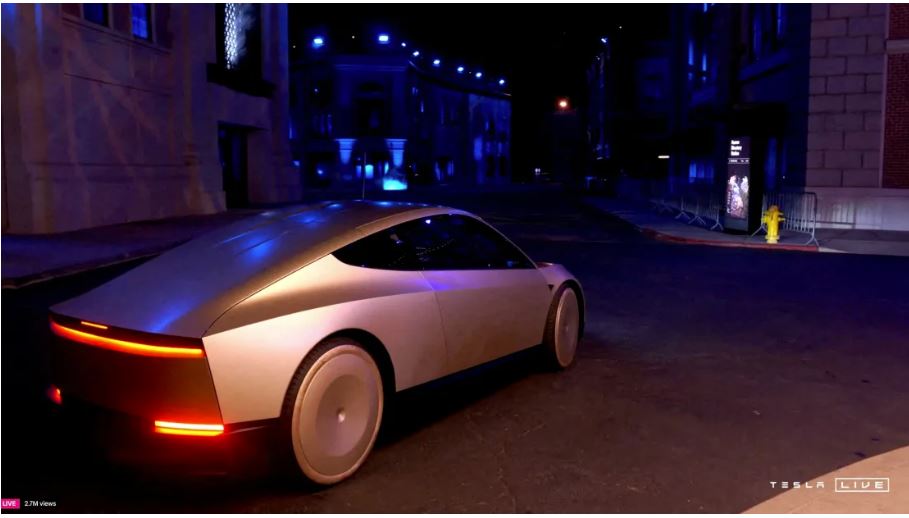
Known for setting optimistic timelines, Musk had previously predicted his robotaxi fleet would be ready within a year—five years ago. At Thursday’s presentation on the Warner Bros. studio lot, Musk admitted, “I tend to be a little optimistic with time frames.”
Investors, however, appeared skeptical. Tesla shares dropped by over 8% in Friday afternoon trading, reflecting doubts about the company’s ability to meet its self-driving car promises, given past delays. The event, livestreamed to millions on Musk’s platform X, started 53 minutes late, but the crowd in attendance remained enthusiastic, eager to experience the 50 self-driving vehicles on-site.
Tesla has long offered a feature called Full Self-Driving (FSD), currently priced at $8,000. Despite the name, Tesla advises that drivers remain ready to take control at any moment, even in FSD mode. Musk announced that Teslas equipped with FSD could soon operate without human intervention in places like California and Texas, where regulators may allow it next year. He also introduced the Cybercab, a fully autonomous vehicle designed without a steering wheel, brake pedals, or accelerator, slated for production by 2026. “It’ll be like sitting in a comfortable little lounge,” Musk said, calling it “awesome.”
The Cybercab will also have wireless charging, using a plate the car drives over. Musk further revealed a larger vehicle, the Robovan, which could carry up to 20 passengers or goods, though no timeline was provided for its release.

Musk proposed that Tesla’s robotaxi fleet would allow car owners to rent out their vehicles for rides, lowering the cost of ownership. This service would compete with human-driven ridesharing services like Uber and Lyft, as well as other autonomous vehicles being tested by companies like Google’s Waymo. Tech journalist Kara Swisher, who has used Waymo in San Francisco, pointed out that Tesla’s competitors are already far ahead. “They’ve driven millions of miles. Elon has just been talking about it,” she said, calling Musk’s robovan “a lovely toaster on wheels.”
While Musk insists Tesla’s data shows its FSD is safer than human-driven cars, others are less convinced. Independent testing by AMCI found drivers had to take control of FSD vehicles every 13 miles on average.
Musk has made similar bold claims before. In a July call with investors, he predicted unsupervised driving “possibly by the end of this year,” while admitting, “I’m the boy who cried FSD. I may be wrong this time.”
Some analysts agree that Tesla is on the right path but caution that fully autonomous vehicles could still be years away. Gene Munster, managing partner at Deepwater Asset Management, noted that human intervention is currently required 3% of the time with FSD. “While 97% of the way there sounds close, it’s not close enough,” he explained. “To go from 95 or 97% to 99% is really hard, and then there’s the question of how many 9s regulators will want to see—99.9% or 99.999%?”
Munster estimated it could take two years to perfect the technology and another two to three years to secure regulatory approval. He also cautioned that Musk’s timeline for the Cybercab should be viewed with skepticism, pointing to the Cybertruck, which took four years from its reveal to production, and the electric semi-truck, which has yet to enter production more than six years after its announcement.
“Recent product announcements should remind investors that patience is a virtue,” Munster added.

