


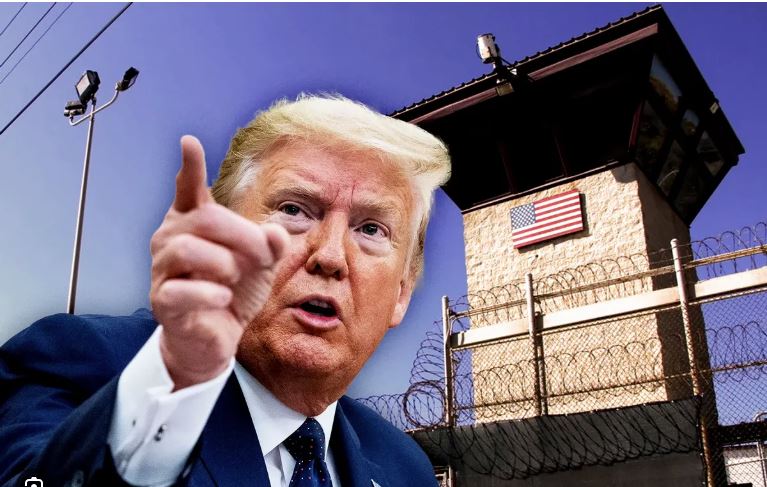
President Donald Trump has signed an executive order to expand detention facilities at the U.S. naval base in Guantanamo Bay, Cuba, to hold up to 30,000 deported migrants. The move is part of a broader immigration crackdown, targeting individuals Trump calls “the worst criminal illegal aliens threatening the American people.”
The order directs the Department of Homeland Security (DHS) and the Pentagon to prepare for large-scale detentions, arguing that some undocumented immigrants are too dangerous to return to their home countries.
Guantanamo’s Existing Migrant Facility to be Expanded
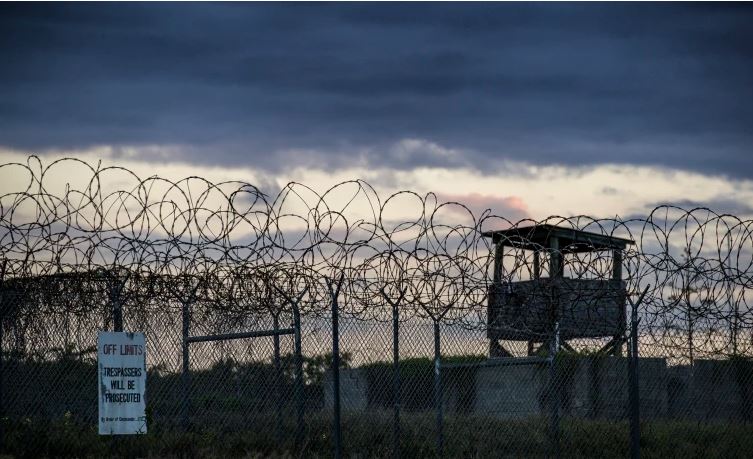
Guantanamo Bay is widely known for its high-security prison housing terrorism suspects. However, it also has a lesser-known migrant detention center. As of February 2024, reports indicate that four people were being held there under secretive conditions. Trump’s order will significantly expand this facility’s capacity.
Trump Signs Laken Riley Act Alongside Expansion Order
The executive order was signed on the same day as the Laken Riley Act, a new law mandating the detention of undocumented immigrants charged with theft-related crimes. The act is named after Laken Riley, a Georgia nursing student killed in 2023 by an undocumented Venezuelan immigrant.
“Today’s signings bring us one step closer to eradicating the scourge of migrant crime in our communities once and for all,” Trump stated. The Laken Riley Act marks his first major legislative victory since returning to office on January 20.
Officials Defend the Move Amid Logistical Challenges
Trump administration officials have defended the decision, emphasizing that the facility would be managed by Immigration and Customs Enforcement (ICE). Border czar Tom Homan stated that Guantanamo’s existing migrant center would be expanded and managed from Miami. Homeland Security Secretary Kristi Noem suggested that the base could house only the “worst of the worst” migrants.

However, a U.S. official told CNN that Guantanamo lacks the infrastructure to accommodate such a large number of detainees. While the base once had 30,000 beds in the 1990s, that capacity no longer exists. To detain such numbers, the U.S. military would need to significantly increase staffing and resources.
Cuba Condemns Trump’s Detention Plans
The Cuban government has strongly criticized the decision, calling it an act of brutality. Cuban President Miguel Díaz-Canel condemned the move on social media, stating that the U.S. is “illegally occupying Cuban territory” and now plans to imprison thousands of deported migrants alongside Guantanamo’s infamous detention center.
Escalating Immigration Crackdown Under Trump’s Second Term
Since returning to the White House, Trump has enacted a series of aggressive immigration measures. These include:
- Declaring a national emergency at the U.S.-Mexico border
- Deploying military troops to curb illegal crossings
- Suspending refugee resettlement programs
With the expansion of Guantanamo’s detention center, Trump is doubling down on his hardline stance, aiming to detain more migrants outside the U.S. mainland. However, logistical challenges and international criticism may pose hurdles for the administration’s plans.

