


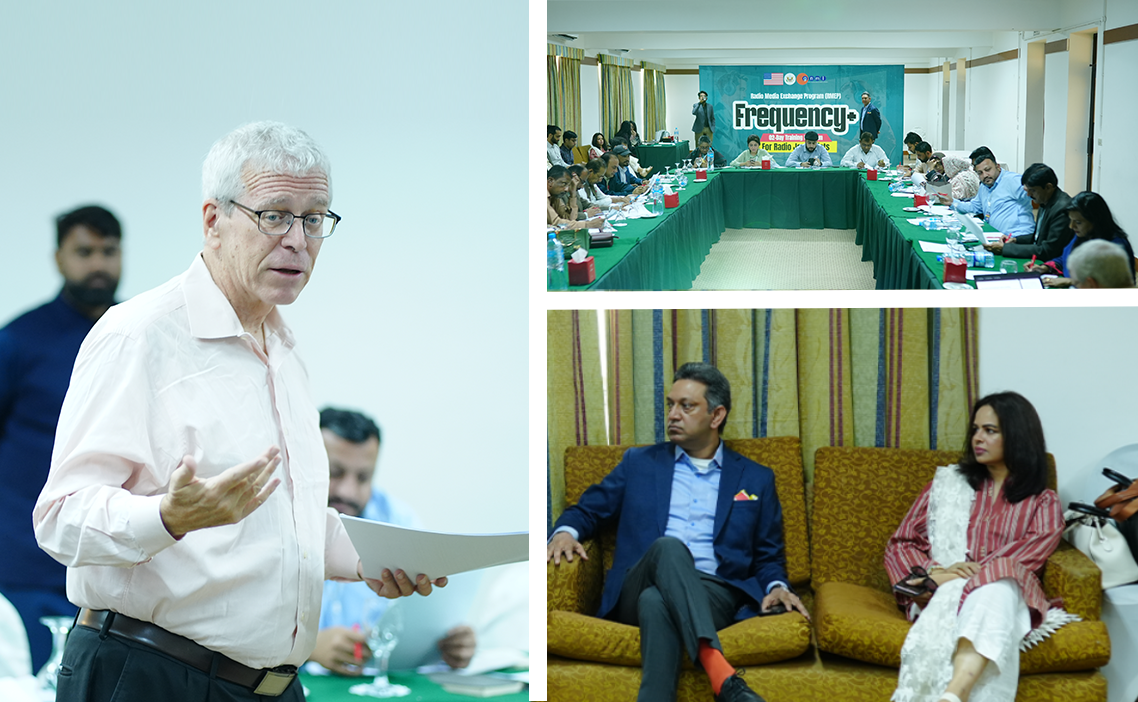
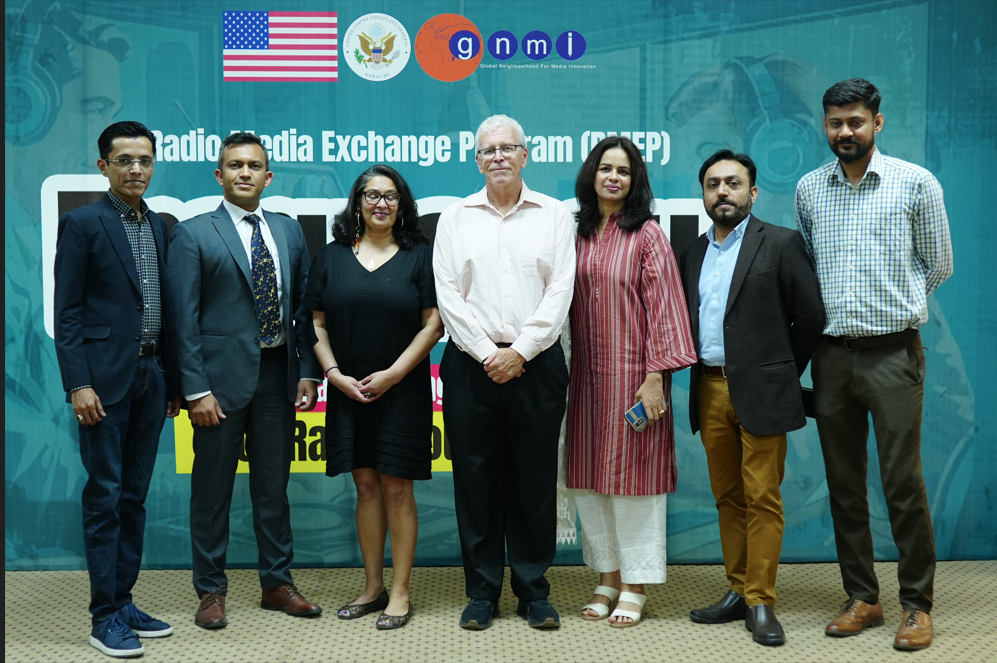
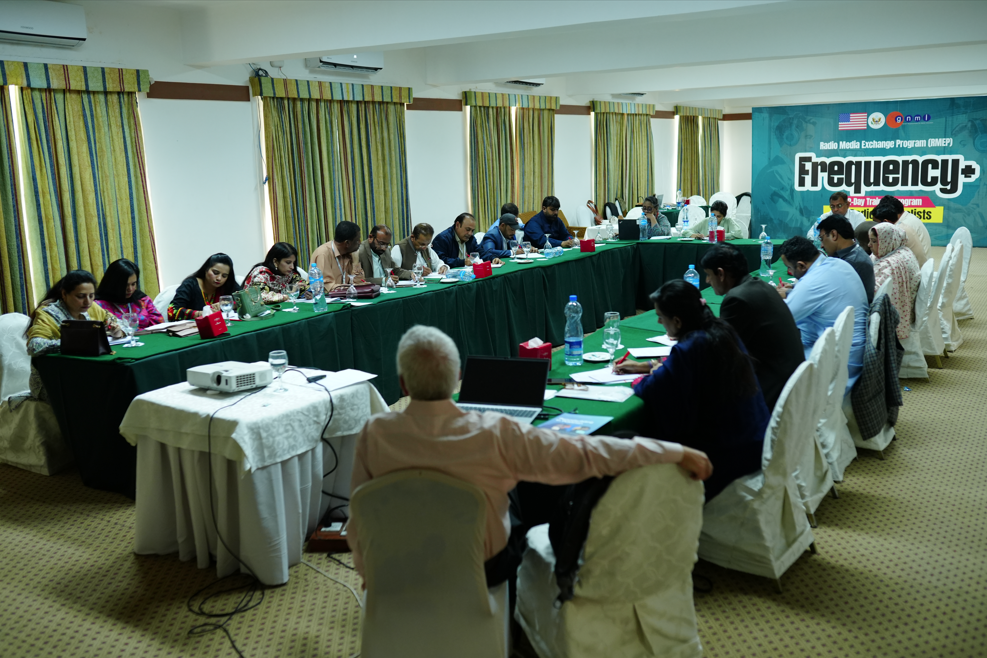
The Global Neighbourhood for Media Innovation (GNMI), in collaboration with the U.S. Consulate Karachi, successfully conducted the Frequency+ training program from January 20-27, 2025, equipping 122 radio professionals in Karachi, Sukkur, Hyderabad, and Quetta with modern broadcasting skills.
Empowering Radio Professionals with AI and Digital Tools
Throughout the training, participants enhanced their technical and digital expertise, gaining insights into emerging trends in radio content production and the integration of Artificial Intelligence (AI) into programming. The goal was to create impactful, dynamic broadcasts that engage diverse audiences. The training was led by Steven Youngblood, a renowned journalism trainer from East-West Center, Hawaii.
The Role of Radio in Strengthening Communities
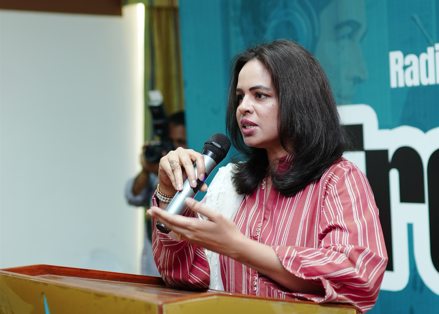
Najia Ashar, President of GNMI, emphasized the critical role of radio in Pakistan, particularly in amplifying marginalized voices and building public trust through reliable information. She described radio as a lifeline for underserved communities, a medium that preserves culture and fosters public engagement.
Addressing Challenges in Pakistan’s Radio Industry
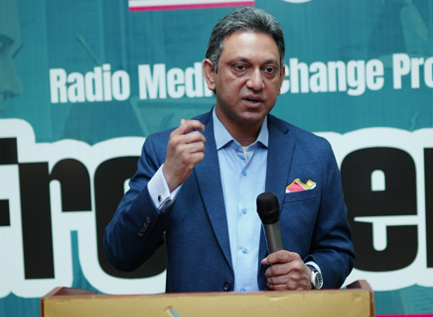
Senior broadcast journalist and President of PULSE USA, Faysal Aziz Khan, highlighted key challenges in the radio sector, including limited funding, outdated infrastructure, and inefficient content distribution. He praised Frequency+ as a transformative initiative to modernize radio, ensuring its relevance and sustainability in an evolving media landscape.
The Push for Radio Digitization
Husnain Raza, Director of Programs at GNMI, underscored the urgency of radio’s digital transformation. He explained how AI integration can expand radio’s reach and efficiency, enabling professionals to create modernized programming that better serves communities and bridges information gaps.
Radio’s Role in Public Service and Crisis Communication
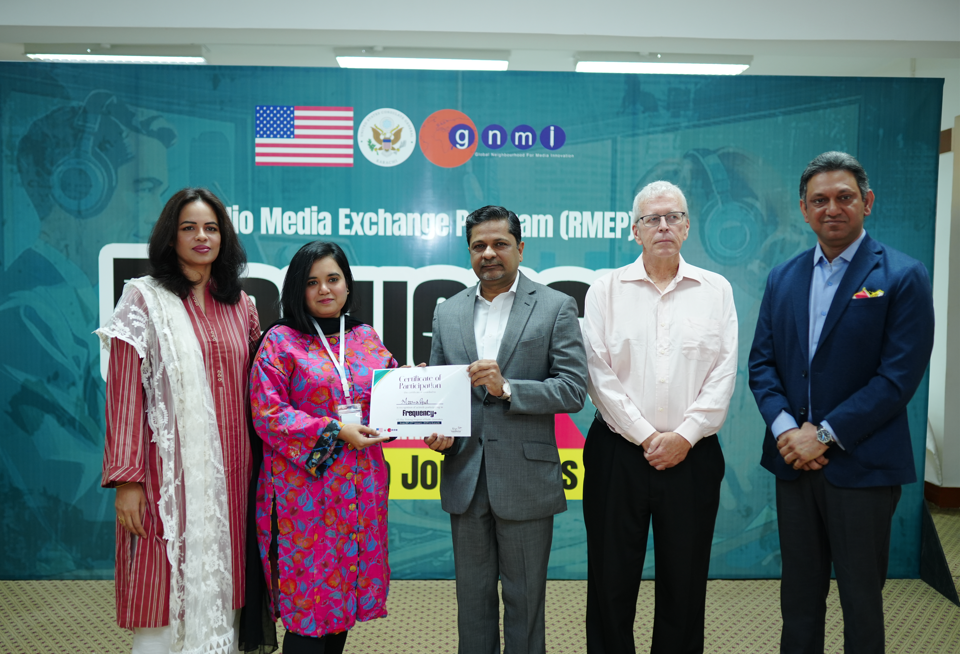
During the culmination ceremony, Commissioner Karachi Syed Hassan Naqvi highlighted radio’s pivotal role in national campaigns, such as polio eradication, voter education, and crisis management. He stressed its unique ability to rapidly disseminate critical information, ensuring even the most remote communities stay informed during emergencies. In an era of rapid technological change, he reaffirmed that radio remains a vital force in public discourse, cultural representation, and emergency response.

Participation from Leading Radio Stations
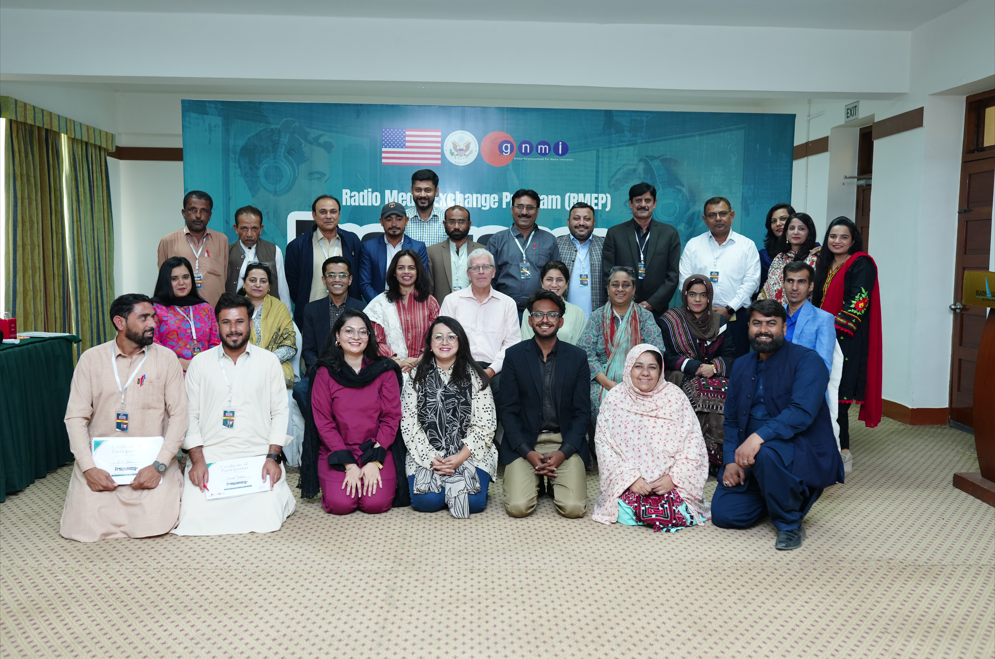
The training saw enthusiastic participation from major radio stations, including:
- Radio Pakistan
- Sindh Police FM 88.66
- Mera FM 107.4
- Hot FM 105
- FM 101
- SMIU FM 96.6
- FM 93 Gwadar
- JEAY FM
- Chiltan FM
- SKY FM Quetta
- Ziauddin University FM
Participants explored innovative content strategies and received certificates of completion, marking their commitment to the advancement of radio broadcasting.
The Future of Radio in Pakistan
With initiatives like Frequency+, Pakistan’s radio industry is poised to become more resilient and digitally advanced, ready to meet the demands of the digital age while continuing its mission of community connection and empowerment.

