


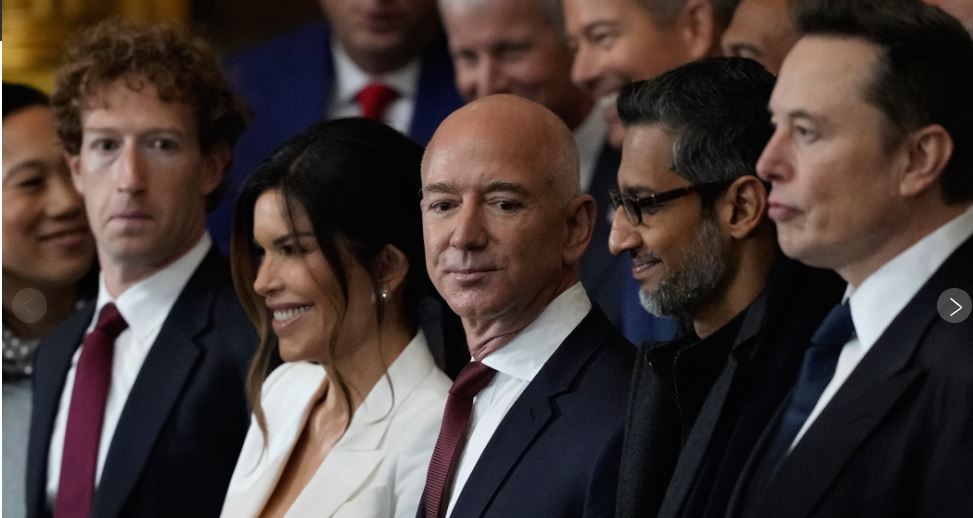
Some of the world’s wealthiest tech moguls—including Elon Musk, Mark Zuckerberg, and Jeff Bezos—were given prime seating at Donald Trump’s inauguration on Monday. Their presence marked an unprecedented display of power and influence, with Google co-founder Sergey Brin also in attendance. Together, their combined net worth exceeds $1 trillion, according to Forbes.
A Shift in Silicon Valley’s Approach to Trump
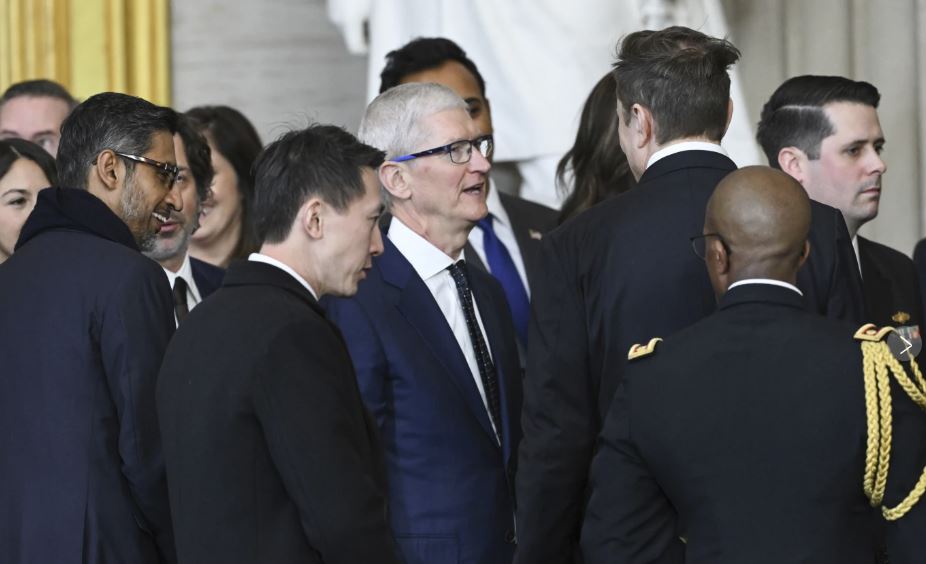
The tech elite have spent weeks since the election warming up to Trump, a stark contrast to the hostile stance many in Silicon Valley took during his first term. Other prominent attendees included Apple CEO Tim Cook and Google CEO Sundar Pichai.
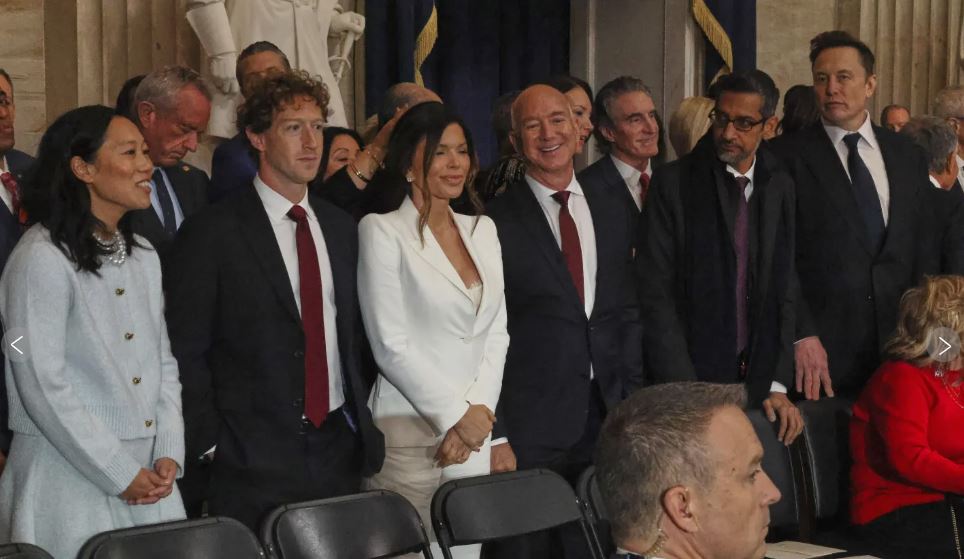
Meanwhile, TikTok CEO Shou Zi Chew was spotted seated in the back row, highlighting the uncertainty surrounding his platform’s future under the new administration.
Exclusive Seats for Tech Tycoons – A Break from Tradition
In a departure from past inaugurations, some of the most exclusive seats—usually reserved for family members, past presidents, and honored guests—were instead given to powerful tech executives. In one striking image, Meta CEO Mark Zuckerberg and his wife, Priscilla Chan, stood alongside Amazon CEO Jeff Bezos and his fiancée, Lauren Sánchez, with Google CEO Sundar Pichai and Elon Musk, one of Trump’s closest advisers.
Tech’s Growing Political Influence
While billionaires have long played a role in U.S. politics, this inaugural display suggests an even more direct influence under Trump’s new administration.
During his final address, outgoing President Joe Biden warned of a growing “oligarchy” of tech billionaires wielding immense power over the nation. He highlighted concerns over their influence on policy, democracy, and the economy.

Trump Dismisses Biden’s Warnings
Speaking from the Oval Office, Trump pushed back against Biden’s remarks, arguing that tech leaders originally backed Democrats but later shifted their support after realizing Biden “didn’t know what the hell he was talking about.”
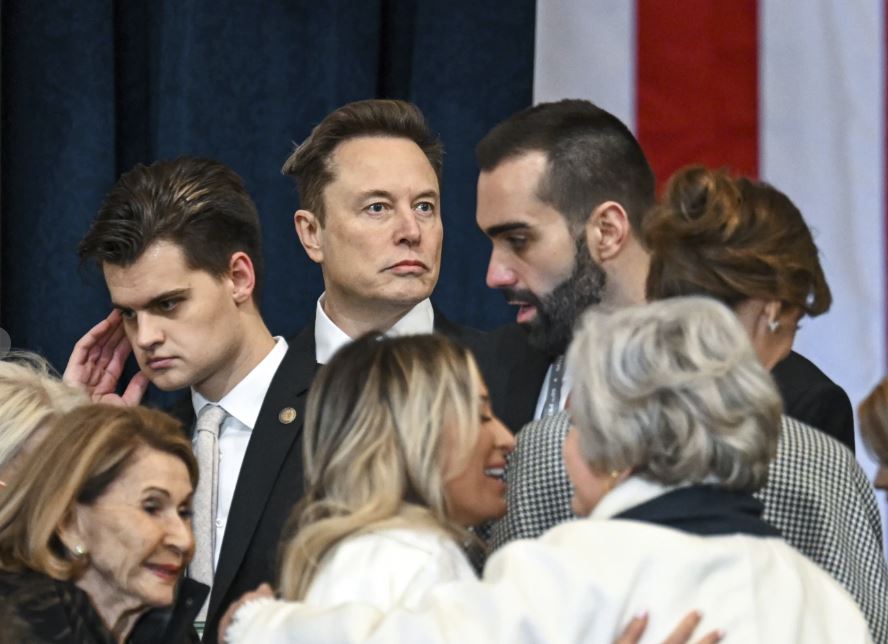
With tech billionaires now at the forefront of Trump’s administration, their impact on policy and governance in the coming years remains a key question.

