


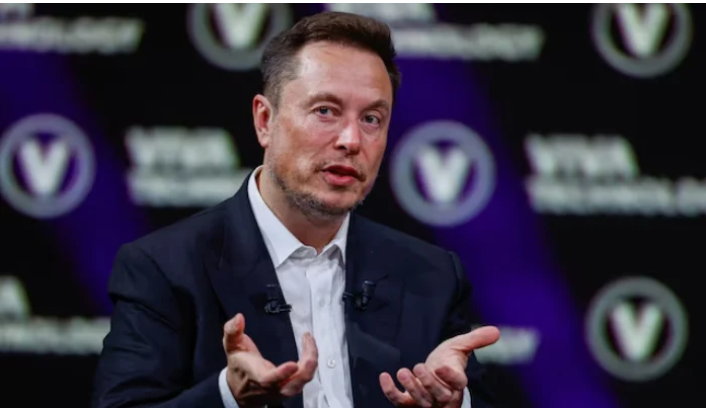
The German government has accused billionaire entrepreneur Elon Musk of attempting to sway the country’s upcoming federal election, scheduled for February, by publicly endorsing the far-right Alternative for Germany (AfD) party. Government officials labeled Musk’s actions, including an opinion piece in Welt am Sonntag, as “nonsense.”
Musk’s Controversial Opinion Piece Sparks Backlash
In the guest opinion piece, Musk described the AfD as Germany’s “last hope,” prompting the resignation of the publication’s commentary editor in protest. A German government spokesperson acknowledged Musk’s freedom to express his opinion but criticized his remarks, stating, “Freedom of opinion also covers the greatest nonsense.”
Musk Defends Involvement in German Politics
Musk, who has significant investments in Germany, defended his stance, arguing that his business interests grant him the right to comment on political matters. He praised the AfD’s policies on deregulation, taxes, and market reforms.
Political Landscape and Election Stakes
The February 23 election follows the collapse of Chancellor Olaf Scholz’s coalition government. The AfD is polling second behind the opposition Christian Democrats, threatening to disrupt potential center-right or center-left coalitions. Germany’s major parties have collectively vowed not to collaborate with the AfD at the national level.
Calls for Scholz’s Resignation
Musk also criticized Chancellor Scholz, demanding his resignation after a tragic car attack at a Christmas market on December 20, which resulted in five fatalities.
AfD Under Intelligence Scrutiny
The German government pointed out that Musk’s endorsement supports a party under surveillance by domestic intelligence for suspected right-wing extremism. “This is a recommendation to vote for a party already partly recognized as right-wing extremist,” the spokesperson said.

German Politicians Condemn Musk’s Actions
Politicians across the spectrum condemned Musk’s comments. Lars Klingbeil, co-leader of Scholz’s Social Democrats (SPD), compared Musk to Russian President Vladimir Putin, accusing both of trying to weaken Germany by supporting anti-democratic forces.
Friedrich Merz, leader of the Christian Democrats and a leading contender to replace Scholz, described Musk’s remarks as “intrusive and pretentious.”

