


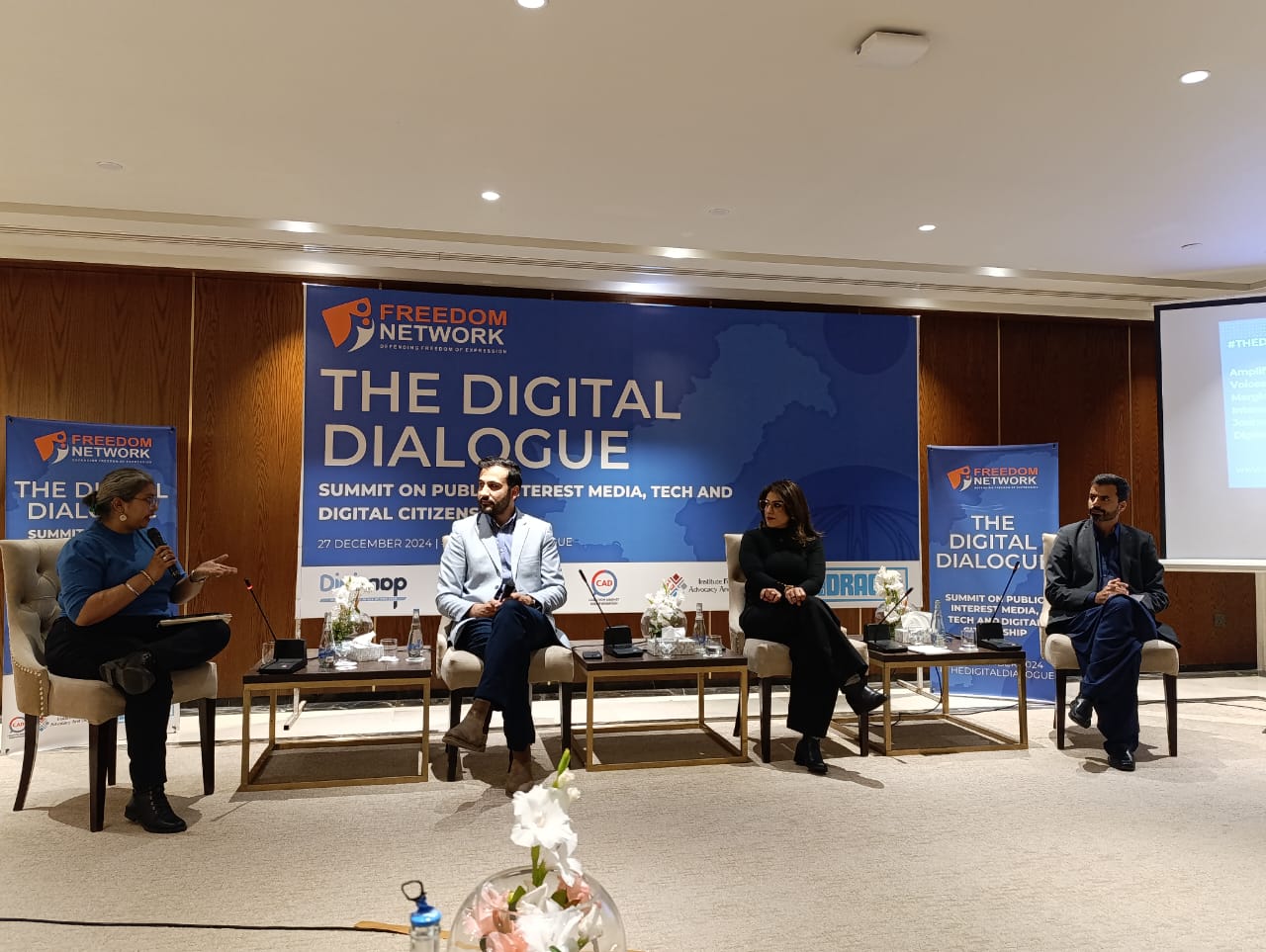
Access to digital spaces and uninterrupted internet should be recognized as fundamental rights alongside the right to information, said human rights activist and former senator Farhatullah Babar during his keynote address at The Digital Dialogue summit. The event, hosted by Freedom Network in Islamabad, focused on public interest media, technology, and digital citizenship.
A Forum for Digital Transformation
The summit brought together over 50 experts from digital journalism, the tech sector, academia, and civil society to discuss solutions for Pakistan’s digital future. The event also marked the launch of the Pakistan Digital Transformation Report 2024, a comprehensive review of the country’s progress in digitalization.
Farhatullah Babar emphasized the need to engage parliamentary committees on Internet governance.
“We must broaden the discussion on a legal framework for digital rights. All must be included in this dialogue,” he said.
Insights from the Summit
Iqbal Khattak, Executive Director of Freedom Network, described the summit as a collaborative platform for addressing challenges in media and Internet policies.
“Equitable access and progressive policies are crucial for Pakistan’s digital future,” he noted.
The report, authored by media development expert Adnan Rehmat, provided an in-depth look at Pakistan’s digital transformation. Rehmat noted that Pakistan ranks among the top 10 most digitalized societies globally in terms of Internet and social media users, but significant challenges remain.
Key Achievements
- Economic growth and innovation driven by IT-enabled services.
- Enhanced governance through digitalization of government services.
- Progress in digital policies, AI, space tech, and digital justice.
Major Challenges
- Limited infrastructure and inadequate investment.
- Tensions between promoting digital freedoms and regulating online expression.
- Hurdles in digital politics, privacy concerns, and startup growth.
Rehmat highlighted the contradictory approach to Internet access:

“The Internet is prioritized for the digital economy yet viewed with suspicion for democratic engagement and freedom of expression.”
Panel Discussions: Charting the Way Forward
The summit featured four panel discussions on media viability, online citizenship, tech sector collaboration, and public interest journalism.
Media Viability
Panelists emphasized the need for diversified revenue streams and quality journalism.
- Talha Ahad (The Centrum Media) urged digital media to focus on content quality to build credibility and revenue.
- Momina Mindeel, a media viability strategist, encouraged collaboration and innovative audience engagement.
- Arsalan Ali (Times of Karachi) highlighted the importance of consistent operations to attract investment and advertising.
Online Citizenship
Discussions centered on empowering citizens for meaningful online participation.
- Usama Khilji, a digital rights activist, criticized selective enforcement of cyber laws that infringe on public rights.
- Usman Zafar, a digital expert, advocated for integrating critical digital literacy into educational curriculums.
“Education and skill-building are essential for discerning reliable online information,” Zafar said.
Tech Collaboration
Panelists from the tech and financial sectors highlighted gaps in digital policymaking.
- Laraib Farhat (P@SHA) called for a balance between regulation and facilitation.
- Mutaher Khan (Data Darbar) noted the lack of incentives for digital startups and the detrimental effects of app bans and slow Internet.
- Mubariz Siddiqui, a tech lawyer, stressed the need to streamline compliance procedures for foreign tech investments.
Public Interest Journalism
This discussion focused on amplifying marginalized voices through digital platforms.
- Ali Mujeeb (Ibex Media Network) shared how their organization reflects underrepresented issues in Gilgit-Baltistan.
- Amber Rahim Shamsi (Nukta) emphasized the potential of digital news organizations to resonate with local audiences.
- Nusrat Gandapur (Damaan TV) highlighted the importance of producing content in local languages to build trust and credibility.
Concluding Remarks
Amber Rahim Shamsi delivered the closing remarks, urging digital media to stay vigilant about Big Tech’s policies while leveraging AI technologies for journalism.
“Digital platforms must strike a balance between ethical reporting and adapting to new technological tools for storytelling,” she said.
As Pakistan navigates its digital transformation journey, platforms like The Digital Dialogue continue to play a vital role in shaping the future of Internet governance and media sustainability.

