


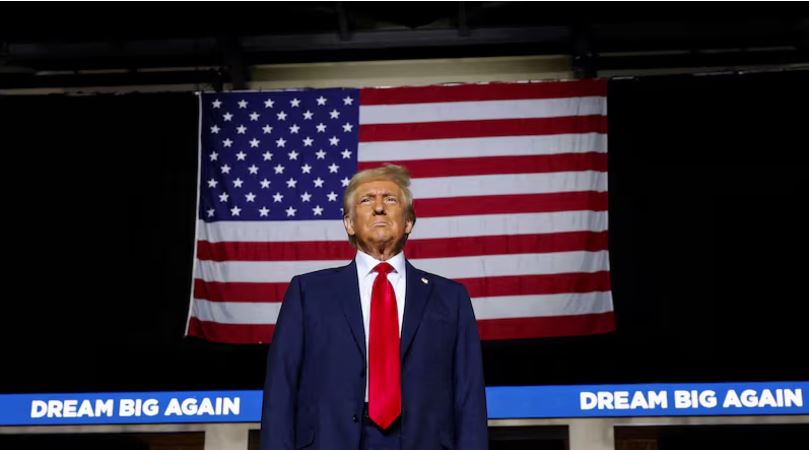
President-elect Donald Trump has unveiled plans to impose significant tariffs on imports from China, Mexico, and Canada, marking a bold move to address immigration, drug trafficking, and trade imbalances.
Tariff Details
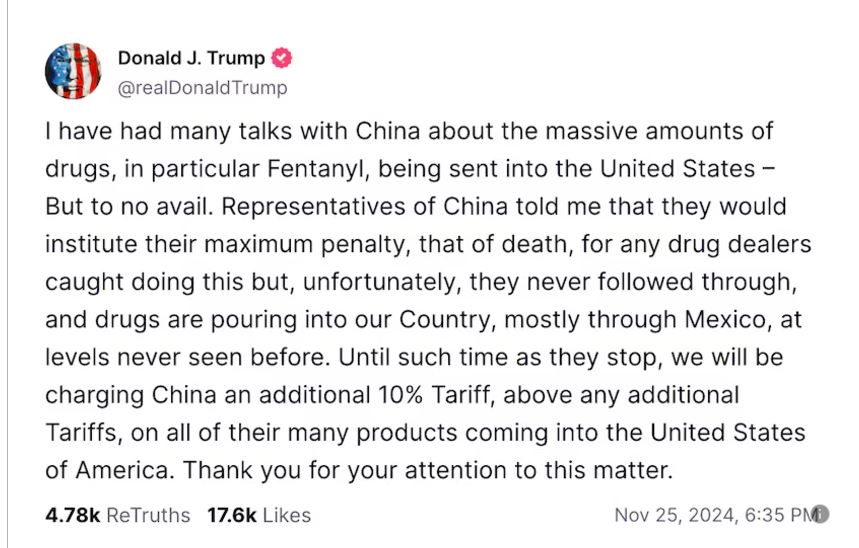
Trump announced a 10% tariff on all Chinese goods and a 25% tariff on products from Mexico and Canada. He claimed these measures would pressure neighboring countries to curb illegal immigration and drug trafficking. “Drugs are pouring into our country, mostly through Mexico, at levels never seen before,” Trump wrote on Truth Social late Monday. He added, “Until such time as they stop, we will be charging China an additional 10% tariff on all their many products coming into the United States of America.”
The 25% tariff on Canadian and Mexican imports would apply across all product categories, with Trump pledging to sign an executive order enacting the tariffs on his first day in office.
Market Reactions
The announcement triggered immediate market volatility. The U.S. dollar gained 1% against the Canadian dollar and 2% against the Mexican peso. Meanwhile, Asian stock markets and European equity futures experienced declines.
Trade and Economic Strategy
Trump’s tariff proposals underscore his broader strategy to leverage trade policies for political and economic goals. This approach aligns with his campaign promises to revive U.S. manufacturing jobs and generate federal revenue. He previously vowed to introduce sweeping tariffs, including a potential 60% levy on Chinese imports and 20% on goods from other countries.
The president-elect has also floated the idea of replacing federal income taxes with tariff revenues, emphasizing his belief in tariffs as a powerful negotiating tool—even with U.S. allies.

Criticism and Economic Concerns
The proposed tariffs have drawn criticism from business leaders and economists, who warn of potential downsides. A 25% tariff on Canadian imports, for instance, could raise energy costs in the U.S., given Canada’s role as the largest external supplier of crude oil. Former Commerce Secretary Wilbur Ross recently cautioned that such measures would likely increase consumer prices, exacerbate inflation, and deliver limited benefits to U.S. job creation.
Economists have widely noted that aggressive tariff policies could disrupt trade flows and burden consumers, dampening the broader economy while fueling inflationary pressures.

