


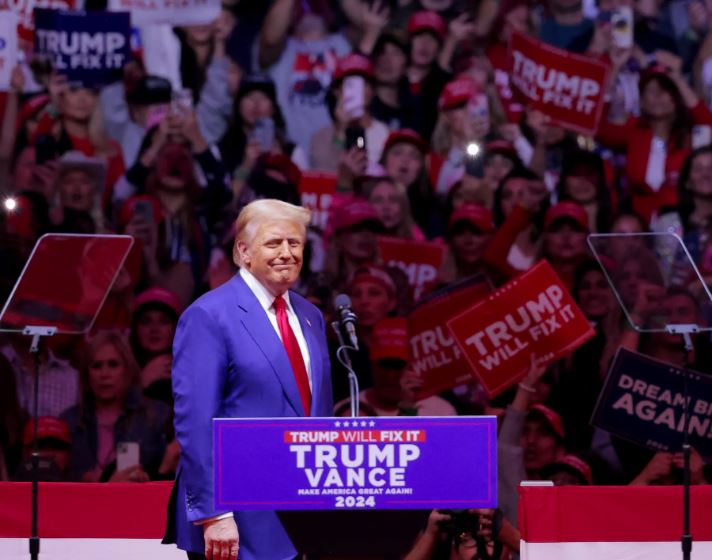
President-elect Donald Trump announced plans on Monday to declare a national emergency on border security and utilize the US military to implement a sweeping mass deportation of undocumented immigrants. This move aligns with Trump’s campaign promises to address immigration issues and stabilize the southern border after record-high crossings during President Joe Biden’s administration.
Military Deployment for Mass Deportations
On Truth Social, Trump confirmed his intentions by amplifying a post from a conservative activist that claimed he was prepared to declare a national emergency and deploy military resources to execute a mass deportation program. Trump responded to the post with a single word: “True!”
The president-elect’s plan involves appointing immigration hardliners, including former acting ICE chief Tom Homan as his “border czar.” At the Republican National Convention, Homan warned undocumented immigrants, “You better start packing now.” Trump’s proposed deportation initiative could directly impact millions, with authorities estimating that around 11 million undocumented individuals reside in the US, affecting an estimated 20 million families.
Concerns Over Civil Liberties and Rhetoric
Trump’s rhetoric during the campaign fueled concerns, as he frequently described migration as an “invasion” and used inflammatory language to paint immigrants as threats to American society. Civil rights advocates have criticized these claims as misleading and harmful, pointing out his references to outdated policies such as the Alien Enemies Act of 1798, which he pledged to invoke to expedite deportations.
Critics also recall the act’s historical misuse during World War II, when Japanese-Americans were placed in internment camps without due process, raising fears of similar infringements on civil liberties.
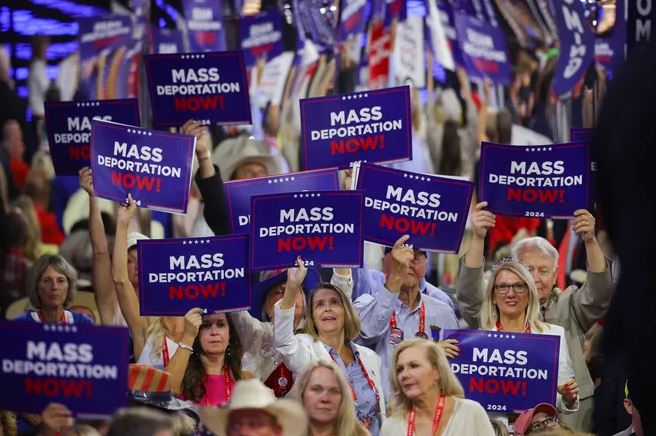
Surveillance Fears Amid Policy Implementation
Immigration and civil rights groups have expressed alarm over the potential exploitation of advanced surveillance technologies under Trump’s administration. Concerns center on the use of data brokers, facial recognition, and other tools to identify and target undocumented immigrants for deportation, which could lead to privacy violations and overreach.

These worries come as Trump doubles down on plans to implement stringent immigration controls. Advocates warn that his administration’s use of cutting-edge surveillance could usher in an era of heightened government scrutiny with significant implications for civil liberties.
Immigration at the Forefront of Trump’s Agenda
As the number of illegal border crossings stabilizes at levels comparable to Trump’s first term after a peak of 250,000 in December 2023, Trump’s hardline immigration policies remain a central focus of his agenda. Whether his plans will withstand legal and societal challenges remains to be seen, but they have already sparked heated debates about the balance between national security and civil rights.

