


US President-elect Donald Trump has announced his selection of Tulsi Gabbard, a former Democratic congresswoman and vocal critic of the Biden administration’s foreign policy, as his director of national intelligence. This appointment marks a significant move as Gabbard takes on a key role in the US intelligence community after Trump begins his second term in January.
Gabbard’s Transition to Intelligence Leadership
Gabbard, 43, left the Democratic Party in 2022 and had been considered a potential running mate for Trump in the 2024 election. She will replace Avril Haines as the head of the US intelligence community, overseeing 18 spy agencies. Gabbard is expected to face little difficulty in securing Senate confirmation, with Republicans set to hold a 52-48 majority when the new Congress convenes in January.
However, her appointment may encounter resistance from some Democratic senators, particularly due to her past outspoken criticism of President Biden’s foreign policies, including his support for Ukraine in its ongoing conflict with Russia.
Controversial Foreign Policy Stance
Gabbard’s foreign policy views have made her a divisive figure. She has been an ardent critic of military interventionism, including the US involvement in the Syrian civil war under former President Barack Obama. Her opposition to such policies, combined with her vocal support for an isolationist approach, has endeared her to conservative and far-right circles, but alienated many on the left.
Trump praised Gabbard’s fearless approach to policy, stating, “I know Tulsi will bring the fearless spirit that has defined her illustrious career to our intelligence community, championing our constitutional rights and securing peace through strength.” He highlighted her long-standing commitment to American freedom, noting her service in the military and her outspoken defense of American values.
Limited Intelligence Experience, Military Background
Despite Gabbard’s limited experience in intelligence work, her military background provides some context for her appointment. She served in Iraq from 2004 to 2005 as a major in the Hawaii National Guard and is currently a lieutenant colonel in the US Army Reserves. However, her lack of direct experience with intelligence oversight may raise questions about her readiness to lead the 18 US spy agencies under the Director of National Intelligence.

A Polarizing Figure in American Politics
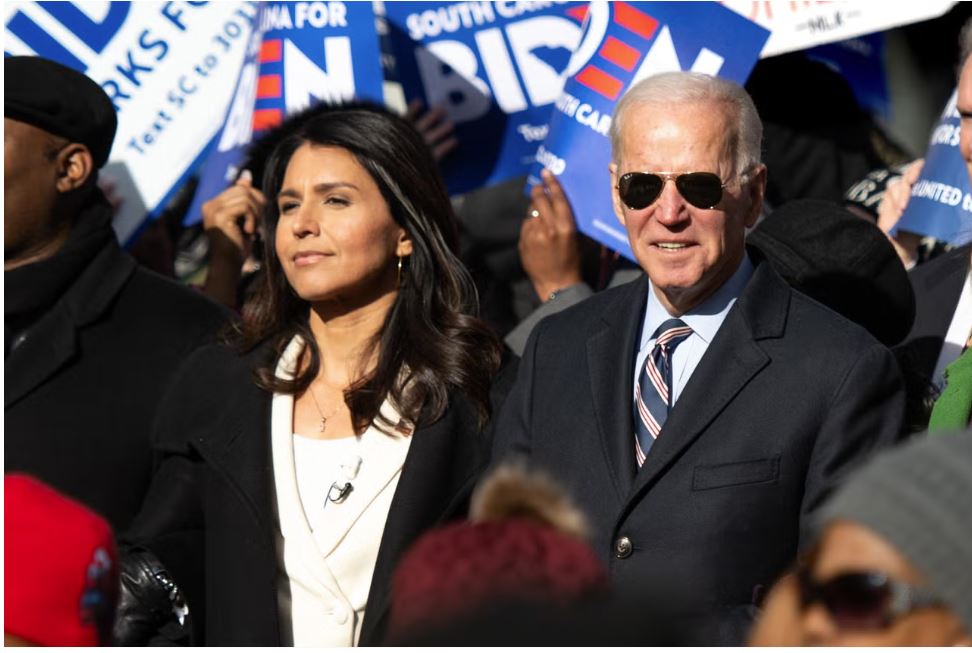
Gabbard, who unsuccessfully ran for the Democratic presidential nomination in 2020, became a prominent critic of Biden after leaving the Democratic Party. She gained significant attention from conservatives and was a frequent guest on far-right TV and radio shows, where she criticized “wokeness” and embraced an America-first, isolationist stance.
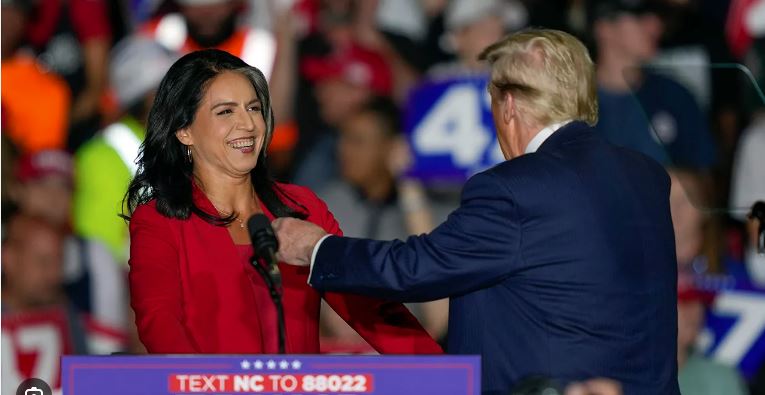
Her relationship with Trump has evolved over time; she endorsed his return to the presidency and even advised him ahead of his pre-election debate with Vice President Kamala Harris in September 2020. Gabbard defended Trump against accusations of racism and sexism, arguing that he treated women with respect and did not condescend to them.
Controversy with Syria and Clinton
Gabbard’s foreign policy views sparked significant controversy during her time in Congress. She met with Syrian President Bashar al-Assad in 2017, a move that drew backlash from both sides of the aisle due to Assad’s involvement in widespread human rights abuses. Her willingness to engage with Assad was part of her broader anti-interventionist stance, which set her apart from both major political parties.
In 2019, Gabbard was involved in a public dispute with Hillary Clinton, who claimed Gabbard was being “groomed” by Russia to disrupt the 2020 election as a third-party candidate. Gabbard filed a defamation lawsuit against Clinton, seeking $50 million in damages, although she dropped the suit in May 2020.
Gabbard’s CPAC Speech and Trump’s Political Persecution
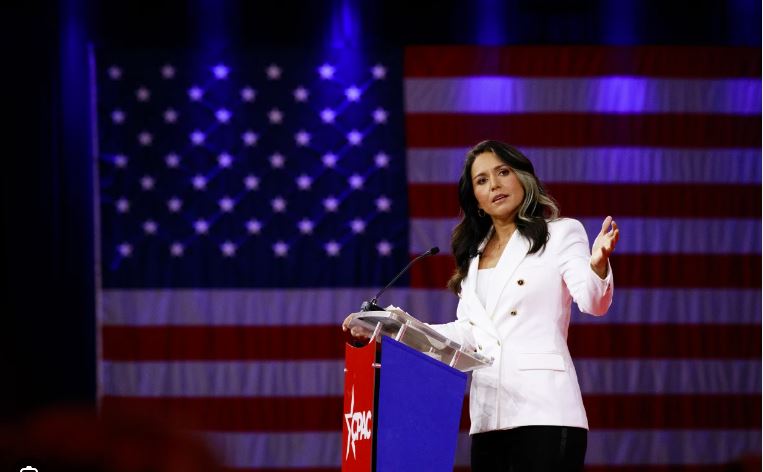
In February of 2024, Gabbard’s name resurfaced as a potential vice-presidential running mate for Trump. She delivered a speech at the Conservative Political Action Conference (CPAC), where she portrayed Trump as a victim of political persecution. She condemned efforts to undermine Trump, describing them as “lunacy” and a reflection of “the mindset of dictators” who would stop at nothing to defeat their political opponents.
Gabbard’s appointment as director of national intelligence reflects her complex and controversial political trajectory, as well as her growing influence within conservative circles.

