


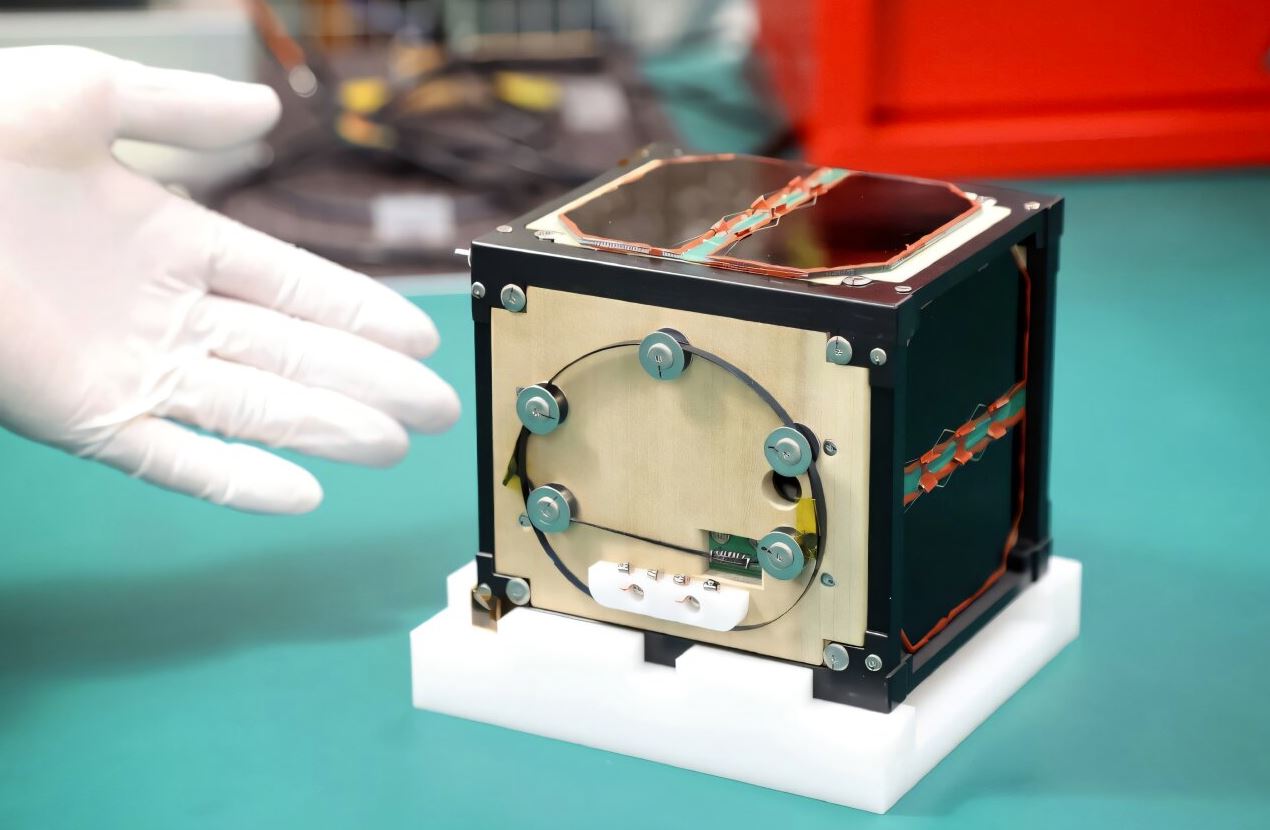
Japanese researchers have launched the world’s first wooden satellite, LignoSat, in a groundbreaking test aimed at assessing the use of wood for future lunar and Mars missions. Developed by Kyoto University in collaboration with homebuilder Sumitomo Forestry, LignoSat is set to travel to the International Space Station aboard a SpaceX mission, from where it will be deployed into an orbit approximately 400 km (250 miles) above Earth.
Sustainable Living in Space
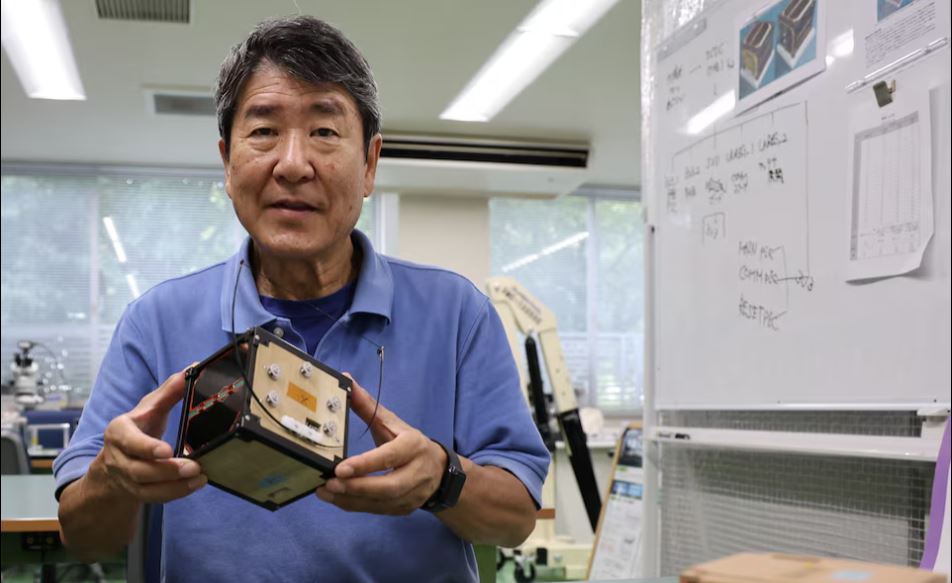
Named after the Latin word for “wood,” LignoSat is designed to showcase the potential of this renewable material for space habitation. Takao Doi, a seasoned astronaut and researcher at Kyoto University, emphasized the significance of using timber: “With timber, a material we can produce ourselves, we will be able to build houses, live, and work in space indefinitely.”
Long-Term Vision for Space Colonization
Doi’s team has a 50-year vision involving the planting of trees and constructing timber houses on the Moon and Mars. To validate the use of wood as a space-grade material, they decided to create a NASA-certified wooden satellite. Koji Murata, a professor of forest science at Kyoto University, noted, “Early 1900s airplanes were made of wood; a wooden satellite should be feasible, too.”
Advantages of Wood in Space
Murata further explained that wood exhibits greater durability in space compared to its performance on Earth, as the absence of water and oxygen prevents rotting and combustion. The use of a wooden satellite also lessens environmental impact at the end of its life cycle. When decommissioned, traditional metal satellites must re-enter the atmosphere to avoid contributing to space debris, producing harmful aluminium oxide particles. In contrast, wooden satellites would burn up upon re-entry, resulting in reduced pollution.
Future Prospects for Wooden Satellites
Doi expressed hope that metal satellites may face restrictions in the future, stating, “If we can demonstrate that our first wooden satellite functions effectively, we aim to present this technology to Elon Musk’s SpaceX.”


