


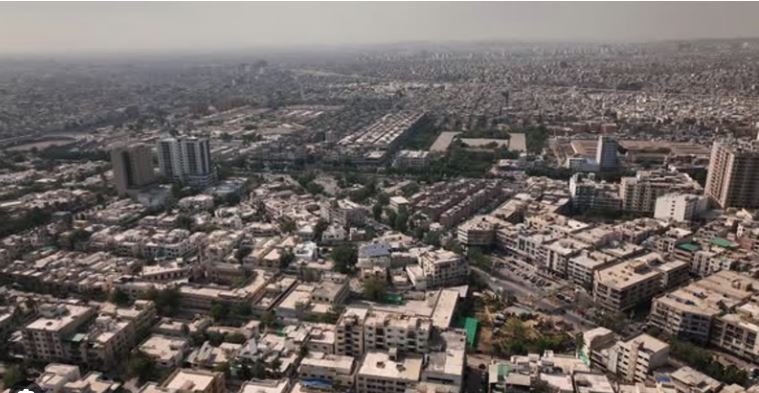
In an effort to bring property valuations closer to market rates and increase revenue collection, Pakistan’s Federal Board of Revenue (FBR) has announced an adjustment of property valuation rates by up to 80% across 56 cities, effective November 1. This measure also aims to encourage investment in more productive economic sectors.
New Cities Added, Moderate Increases Across Property Types The revision introduces 12 new cities, including Bannu, Chiniot, Kotli Sattian, and Ghora Gali, to the valuation table. According to FBR Chairman Rashid Mahmood Langrial, these valuation rates are “moderately revised upward,” considering property type, location, and other factors. This is the fifth revision since 2016, with previous adjustments made in 2018, 2019, 2021, and 2022.
Revised Valuations Impact Federal Taxes These updated valuations will affect federal taxes, including capital gains tax (CGT) and withholding tax. Unlike other countries where taxes are based on actual transaction values, Pakistan often sees a discrepancy between the declared collector value and the true transaction price. The FBR collects withholding taxes under Sections 236C, 236K, and 7E of the Income Tax Ordinance and the 5% federal excise duty imposed in the recent budget. Provinces have also raised district collector (DC) rates.
Revenue Collection and Implementation Challenges In the last fiscal year, the FBR collected close to Rs150 billion in advance income tax on property transactions under Sections 236C and 236K, though data on revenue from Section 7E and other measures remains pending. A senior FBR official involved in the valuation revisions noted that the increases were “less dramatic than expected” and based on mid-range plot values. Errors identified in the valuation tables will be addressed.
Real Estate Sector’s Role and Future Prospects The updated rates are part of the FBR’s ongoing efforts to determine fair market prices in major urban centers. While property transactions have slowed, particularly in housing societies, there is little evidence that funds are shifting from real estate to other productive sectors. A World Bank study suggests real estate tax revenue in a similar economy could reach Rs600-700 billion, though Pakistan’s current collection is closer to Rs200 billion, according to tax officials.


