


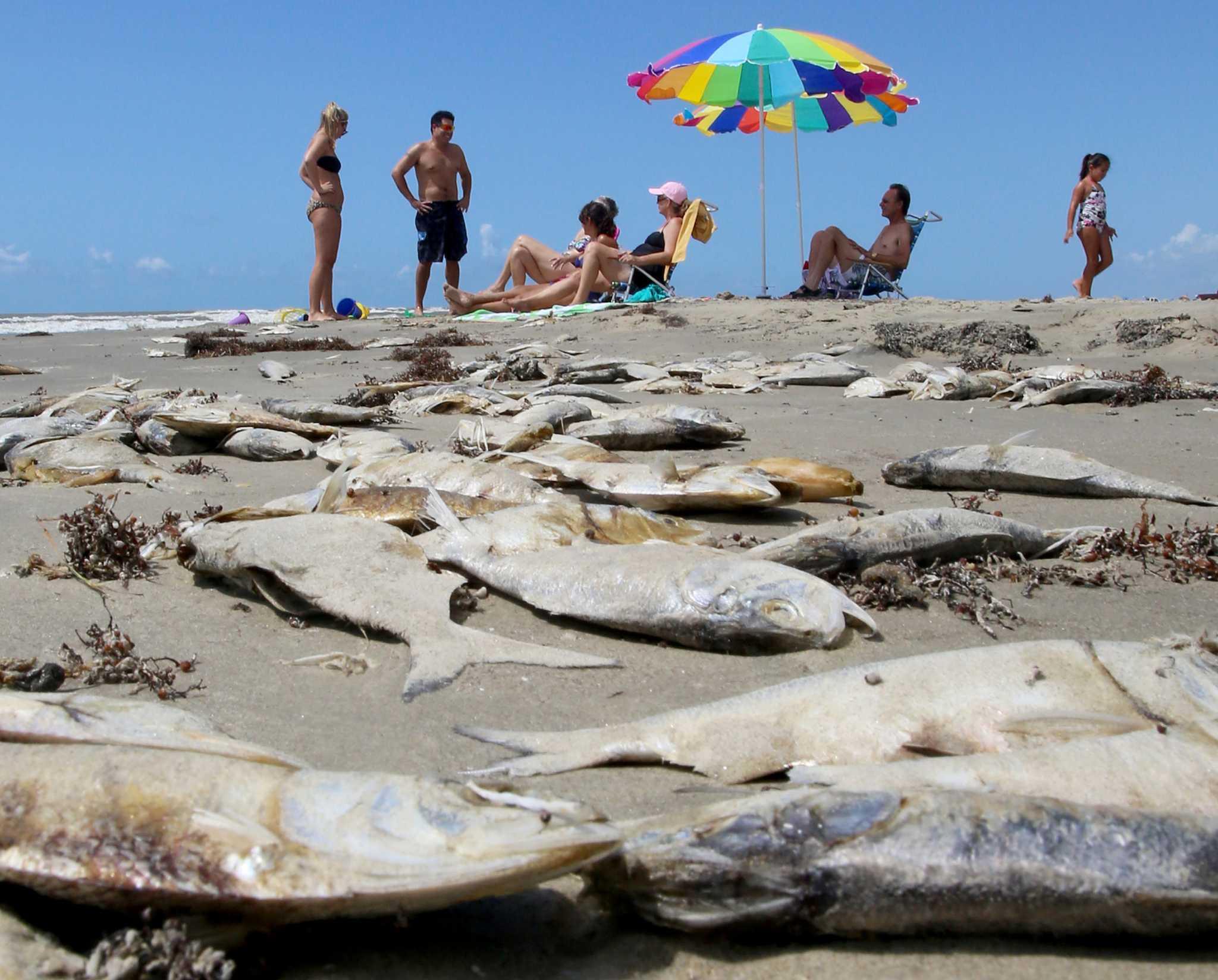
HOUSTON, October 5, 2026 — A harmful algal bloom known as red tide is affecting parts of the Texas Gulf Coast, raising concerns over respiratory irritation for beachgoers and causing fish kills in some coastal areas.
The bloom is caused by Karenia brevis, a microscopic marine organism that can produce *brevetoxins. Recent monitoring by the National Oceanic and Atmospheric Administration (NOAA) shows red tide at concentrations capable of causing respiratory irritation in parts of *Brazoria, Calhoun and Matagorda counties. Recent satellite and water-sampling data have also detected the algae in Nueces County, although the reported levels there have not uniformly been considered a respiratory risk.
Matagorda County faces highest current respiratory risk
NOAA’s latest Gulf Coast harmful algal bloom forecast indicates that some beaches in Matagorda County could face a high risk of respiratory irritation, particularly when winds push air from the Gulf toward the shore.
Brazoria and Calhoun counties also have red tide concentrations that can cause respiratory irritation when winds are blowing onshore. Because red tide is often patchy, conditions can vary significantly from one beach to another and can change over relatively short periods.
Recent water samples collected between September 25 and October 2 detected Karenia brevis along the Texas coast at levels considered capable of causing respiratory irritation in Brazoria, Calhoun and Matagorda counties.
Coughing and breathing irritation reported
The primary concern for people visiting affected beaches is exposure to toxins released by the algae.

When waves and surf break apart the algae, toxins can become airborne in tiny sea-spray particles. People near the shoreline may then experience coughing, throat and eye irritation, wheezing or shortness of breath.
Texas Parks and Wildlife Department notes that people with existing respiratory conditions, including asthma, may experience symptoms more severely. Symptoms can often improve after leaving the affected beach area.
Anyone who begins coughing or develops breathing irritation while at an affected beach should move away from the shoreline and into an area with cleaner air. People experiencing significant breathing difficulty should seek medical attention.
Fish kills linked to the bloom
The environmental impact is also becoming visible along the coastline.
Texas Parks and Wildlife Department has documented fish kills associated with the red tide event. Dead fish have included species such as Gulf menhaden and striped mullet, while additional species have been found in smaller numbers. Water samples collected by TPWD have shown moderate to high concentrations of red tide in affected areas.
In affected areas near East Matagorda Beach, close to the mouth of the Colorado River, and near the Colorado River Locks, officials have reported fish kills and respiratory symptoms. Water samples collected in late September showed high concentrations of red tide at those locations.
The toxins produced by Karenia brevis can interfere with the nervous system and breathing mechanisms of fish, causing them to die and wash ashore. Dead fish are therefore one of the most visible signs of a red tide bloom.
What does red tide mean for seafood?
The bloom also has implications for oysters, clams, mussels and other shellfish.
Texas health officials warn that molluscan shellfish can accumulate brevetoxins while filtering algae from contaminated water. The shellfish may look normal, and cooking does not destroy the toxin. Consumption can lead to neurotoxic shellfish poisoning, which may cause nausea, vomiting, diarrhea, abdominal pain, weakness and neurological symptoms.
The state’s shellfish-harvesting information shows numerous Texas coastal harvesting areas closed because of elevated Karenia counts or precautionary measures. The status of harvesting areas can change as monitoring continues.
Health officials therefore advise people not to collect or eat dead, dying or distressed fish found along the beach. Legally marketed seafood is subject to regulatory controls and is different from seafood collected from an affected area.
Conditions can change quickly
One of the challenges in managing red tide is its uneven distribution. The bloom does not necessarily affect an entire coastline equally. One beach can have elevated concentrations while another nearby location has much lower levels.
Wind direction is particularly important because airborne brevetoxins are more likely to affect people when winds blow from the water toward the beach. NOAA continues to monitor the bloom through water samples, satellite observations and forecasting.
Texas Parks and Wildlife Department and state health authorities are continuing to monitor the event. TPWD’s Kills and Spills Team collects water samples, tracks affected wildlife and works with other agencies when human-health concerns arise.
Reader Safety Checklist
Before visiting a Texas Gulf Coast beach during the current red tide event, residents should:
- Check the latest beach conditions before leaving Houston.
- Avoid beaches where officials report elevated red-tide concentrations or respiratory risk.
- Leave the shoreline immediately if coughing, throat irritation, burning eyes, wheezing or shortness of breath begins.
- Keep children and older family members away from areas where symptoms or fish kills are being reported.
- People with asthma or other respiratory sensitivities should take extra precautions and consider avoiding affected beaches.
- Do not touch, collect or eat dead or distressed fish found along the shoreline.
- Do not harvest oysters, clams, mussels or other shellfish from closed or affected areas.
- Do not assume seafood is safe simply because it looks normal or has been cooked; brevetoxins are not reliably destroyed by cooking.
- Pay attention to wind direction, as onshore winds can increase exposure to airborne toxins.
- Seek medical attention for serious or persistent breathing difficulties.
For Pakistani families in the Houston area, who often travel to Gulf Coast beaches for weekend outings and family gatherings, checking conditions before travelling is particularly important. Families should be especially alert to respiratory symptoms and take extra precautions when travelling with children or older relatives.
The current red tide event is primarily a coastal environmental and public-health concern rather than a threat to Houston itself. However, because the affected coastline includes popular destinations within driving distance of the Houston metropolitan area, changing conditions remain important for weekend beachgoers and coastal communities.

