



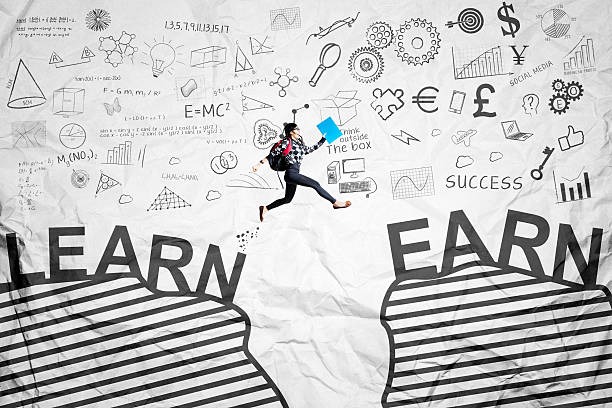
Education is often seen as the ultimate path to success, and parents in Pakistan spare no effort in ensuring their children receive the best possible learning opportunities. They sacrifice personal comforts, take on financial burdens, and push their children into highly competitive academic environments all in the hope of securing a bright future. But amid this relentless pursuit, one critical question emerges:
Is our education system truly capable of equipping students with the skills and knowledge required for a successful career, or is it merely producing degree holders struggling to earn a decent livelihood?
In Pakistani society, education has become a symbol of social status rather than a tool for personal growth. Parents are obsessed with their children scoring the highest marks, securing admission into prestigious institutions, and landing a “respectable” job. The competition begins in kindergarten, where parents rush to enroll their toddlers in the most expensive schools, believing that an elite institution guarantees a prosperous future.
As children grow, the pressure only intensifies. Students are pushed to memorize textbooks instead of understanding concepts, forced into after-school tuition centers, and deprived of leisure time all to ensure they “win” the academic race. The goal is not to nurture creativity, problem-solving, or independent thinking, but rather to outperform relatives and neighbors in exams.
For many parents, their children’s success is measured by entry into medicine, engineering, or civil services. Any career outside of these conventional paths is often dismissed as inferior, leading to societal judgment and family disappointment. This rigid mentality has created an oversupply of graduates in these fields, while industries like entrepreneurship, creative arts, digital media, and vocational trades remain neglected.
Despite investing millions of rupees in education, many Pakistani graduates find themselves unemployed or underpaid. Universities continue to produce thousands of engineers, doctors, and business graduates every year, but the job market is shrinking, and competition for limited opportunities is fierce.

Several key issues contribute to this crisis:
- Outdated Curriculum: Pakistani educational institutions focus heavily on theory, neglecting practical skills and real-world application. Graduates often lack communication, problem-solving, and digital skills, making them unprepared for modern careers.
- Lack of Skill-Based Training: Unlike countries that integrate vocational education into mainstream schooling, Pakistan still follows a one-size-fits-all approach. The absence of skill-based learning results in degree holders with no employable expertise.
- Limited Career Guidance: Students are rarely exposed to alternative career paths such as freelancing, entrepreneurship, or the gig economy, despite these being booming industries worldwide.
- The ‘Government Job’ Obsession: Many families believe a stable government job is the goal, discouraging children from pursuing innovative careers that could lead to financial independence and professional satisfaction.
The immense pressure to excel academically has taken a serious toll on the mental health of students. Depression, anxiety, and even suicidal tendencies are becoming alarmingly common among Pakistani youth, as they struggle under unrealistic expectations. The idea that anything less than an “A+” is a failure destroys self-esteem and fosters an unhealthy mindset that prioritizes rote learning over actual knowledge.
Additionally, the fear of societal judgment forces students to suppress their true passions. A child with artistic talent might be discouraged from pursuing fine arts because “log kya kahenge?” (What will people say?). Similarly, someone interested in digital marketing or technology might be pushed into engineering or medicine because those professions hold more prestige in family gatherings and marriage proposals.
If Pakistan wants to produce innovators, problem-solvers, and independent thinkers, parents must redefine their understanding of success and adopt a healthier approach to education. Here’s how:
Success is not limited to doctors and engineers. The world is rapidly changing, and digital media, freelancing, entrepreneurship, and vocational trades now offer lucrative and fulfilling careers. Parents must explore alternative options for their children and allow them to follow their natural talents and interests.
Instead of pressuring children to memorize textbooks, parents should encourage critical thinking, problem-solving, and hands-on learning. Practical skills like coding, public speaking, business management, and financial literacy should be valued just as much as academic achievements.
The constant academic pressure and competition are damaging children’s self-esteem and creativity. Parents must allow their children to engage in extracurricular activities like sports, music, arts, and social work, which contribute to mental health, leadership skills, and social development.
Rather than solely focusing on securing a job, children should be taught how to earn independently. Encouraging them to freelance, start small businesses, or learn digital skills can help them achieve financial stability at a younger age. Pakistan already has a thriving freelancing industry, and young individuals can earn substantial income through platforms like Upwork and Fiverr, a concept still foreign to many parents.
Parents should stop viewing their children’s achievements as a measure of their own success. Children should be encouraged to pursue careers they love rather than being forced into fields that merely satisfy societal expectations. The need for validation from relatives and neighbors should no longer dictate educational and career choices.
While parents play a crucial role, educational institutions and policymakers also need to modernize the system and make education more relevant to today’s job market. Some urgent reforms include:
✔ Revamping the Curriculum: Introducing skill-based learning, practical projects, and entrepreneurship programs at school and university levels.
✔ Career Counseling: Schools should offer professional career guidance and mentorship to help students discover career options beyond conventional fields.
✔ Internship & Apprenticeship Programs: Encouraging students to gain hands-on experience through internships before they graduate.
✔ Mental Health Support: Schools must introduce counseling programs to help students cope with academic stress.
In Pakistan, education should no longer be about securing degrees just to earn money it should be about empowering individuals to think, create, and innovate. Instead of forcing children into the rat race of exams and jobs, we must focus on holistic development, real-world skills, and personal growth.
It is time for parents to stop treating education as a status symbol and start supporting their children in becoming confident, independent, and skilled individuals. Success is not measured by grades, degrees, or job titles, it is measured by happiness, fulfillment, and the ability to contribute positively to society.
Until we change our collective mindset, Pakistani students will continue to struggle not because they lack potential, but because they are trapped in an outdated system that values competition over creativity.

